

A Chemical Weapon From WWI Is Used To Grow Your Strawberries
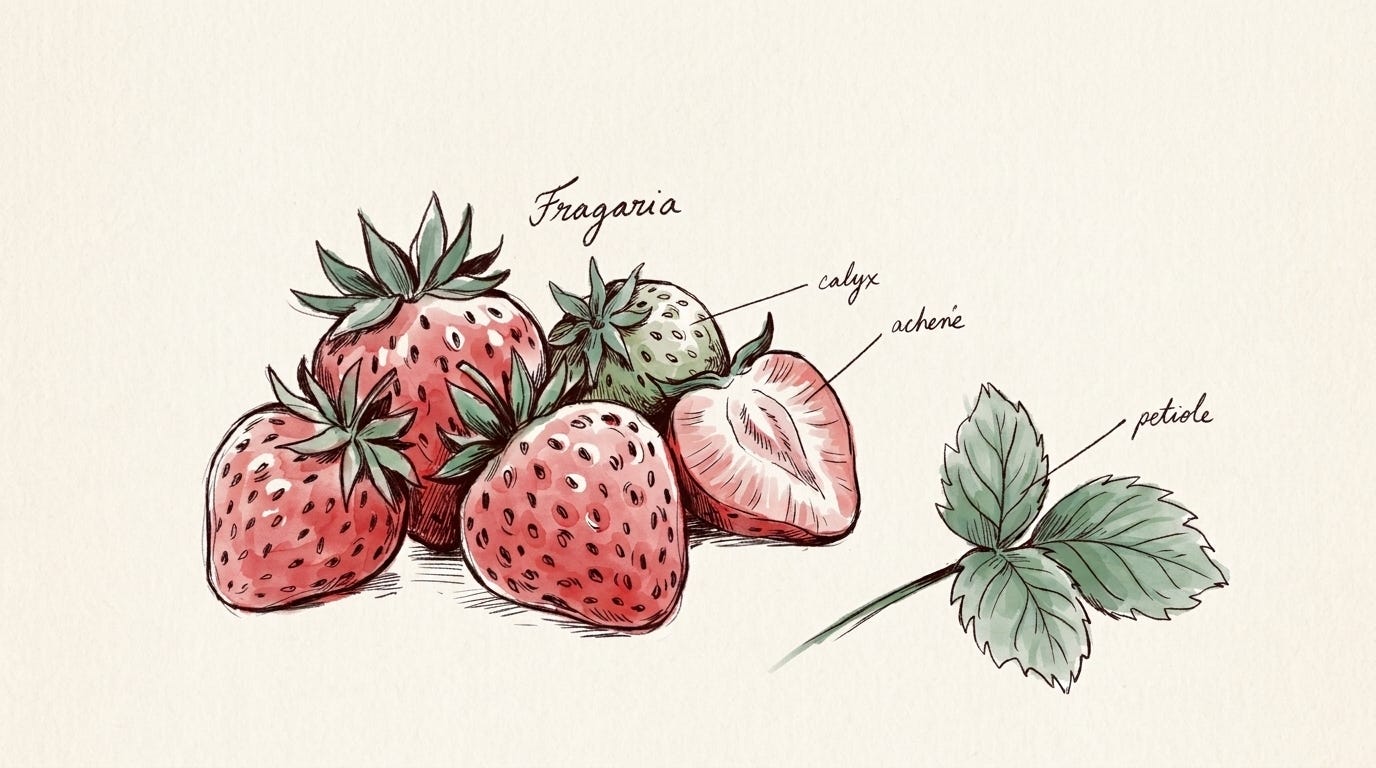
The soil that your strawberries grow in is dead before the plant even gets planted in it.
Not dead as in dry or poor in nutrients, but dead as in every living thing in it has been killed. All the fungi, the bacteria, the insects, the worms. All the microorganisms that healthy soil needs to function, before a single strawberry plant actually touches the ground.
This is how almost every single commercial strawberry is grown.
In the 1950s, California strawberry farmers started losing crops to a soil fungus called Verticillium wilt. The disease spread through fields and wiped out plants before they could fruit. The industry needed a fix, and what they found was methyl bromide, a colorless, odorless gas injected directly into the soil before planting. It killed everything, not in the general sense, but literally. The verticillium wilt. Every other fungus. Every pest. Every beneficial organism that happened to be living in the ground. The soil came out the other side chemically clean, and the strawberries grew.
More than 90% of California’s commercial strawberry fields used methyl bromide. The entire production system was built around it.
Then… scientists discovered that it was eating the ozone layer. Methyl bromide turned out to be one of the most destructive ozone-depleting substances known.
The Montreal Protocol listed it in 1993 and started moving to ban it and the US was supposed to phase it out by 2005.
The California strawberry industry lobbied for exemptions and… they got them. In 2006, the year after the ban was supposed to be complete, use actually increased by 5%, applied to an additional 2,200 acres. Full prohibition on strawberry fields didn’t come until 2016.
By then the industry had found a replacement. Two replacements, actually. They get applied together. The first is 1,3-dichloropropene, which the EPA classifies as a probable human carcinogen. The second… chloropicrin.
Chloropicrin was first manufactured for use as a chemical warfare agent in World War I. It causes intense eye irritation and lung damage the second its inhaled. It’s banned for agricultural use in the European Union and Russia has been accused of deploying it against Ukrainian soldiers since 2022.
It’s also what goes into the ground before your strawberries are planted.
Both chemicals get injected into the soil together and sealed under plastic tarps. Almost 30 million pounds of these fumigants get applied to California farm fields every year, a huge portion of all pesticides used in the state. The soil underneath the tarp doesn’t just lose its pests… It loses everything. The microbial communities that take years to develop. The fungal networks that help plants absorb nutrients. The biological complexity that makes soil soil rather than just… dirt.
When that tarp comes off, the field is clean. The strawberries go in. They grow in something closer to a sterile growing medium than earth.
The variety that dominates commercial production today, the giant red berry that ships well and looks perfect on a store shelf, was specifically bred during the fumigation era for yield and appearance rather than disease resistance. It doesn’t do well in non-fumigated soil. The fruit and the chemical process that precedes it were developed together, each one needing the other to work.
California grows about 90% of the strawberries sold in the United States. The red berry in your kitchen right now almost certainly came from a field that was chemically sterilized before planting, using compounds that began their lives as weapons of war.
Which is pretty insane.
Sources
UC Davis SAREP. “Alternatives to Methyl Bromide.” https://sarep.ucdavis.edu/are/ecosystem/methyl-bromide
PubMed / Phytopathology. “Strawberries at the Crossroads: Management of Soilborne Diseases in California Without Methyl Bromide.” https://pubmed.ncbi.nlm.nih.gov/32075499/
EPA. “Methyl Bromide.” https://www.epa.gov/ods-phaseout/methyl-bromide
Grist. “An EPA-approved pesticide is worse than the one it’s replacing.” https://grist.org/article/sterile-soil-dirty-hands/
Grist. “How strawberry farmers got themselves and the ozone layer out of a jam.” https://grist.org/article/how-strawberry-farmers-got-themselves-and-the-ozone-layer-out-of-a-jam/
Center for Food Safety. “Toxic Chemicals in Our Soil: Time to Pull the Plug on Methyl Bromide.” https://www.centerforfoodsafety.org/blog/4076/toxic-chemicals-in-our-soil-time-to-pull-the-plug-on-methyl-bromide
The Inflamed Generation / Substack. “Your Strawberries Are Wrapped in a Chemical Weapon.”

ScienceDirect. “Chloropicrin.” https://www.sciencedirect.com/topics/pharmacology-toxicology-and-pharmaceutical-science/chloropicrin
Britannica. “Chloropicrin.” https://www.britannica.com/science/chloropicrin
Cloud SDS. “Chloropicrin: Hazards, Uses, Safety, and Regulations Explained.” https://cloudsds.com/chemical-hazard-and-safety/chloropicrin-hazards-uses-safety-and-regulations-explained/
PMC / Frontiers in Microbiology. “Long-term effects of chloropicrin fumigation on soil microbe recovery.” https://www.ncbi.nlm.nih.gov/pmc/articles/PMC10375714/
Newsweek. “Russia Accused of Using WWI-Era Chemical Weapon in Ukraine.” https://www.newsweek.com/russia-accused-first-world-war-chemical-weapon-ukraine-chloropicrin-1865516
California Department of Pesticide Regulation. “Options to Methyl Bromide for the Control of Soil-Borne Pests.” https://www.cdpr.ca.gov/wp-content/uploads/2024/11/sept2000.pdf