Aspirin and Heroin Were Invented 11 Days Apart By the Same Person
The pill you take for a headache was discovered 3,500 years ago. A German company patented it in 1897.
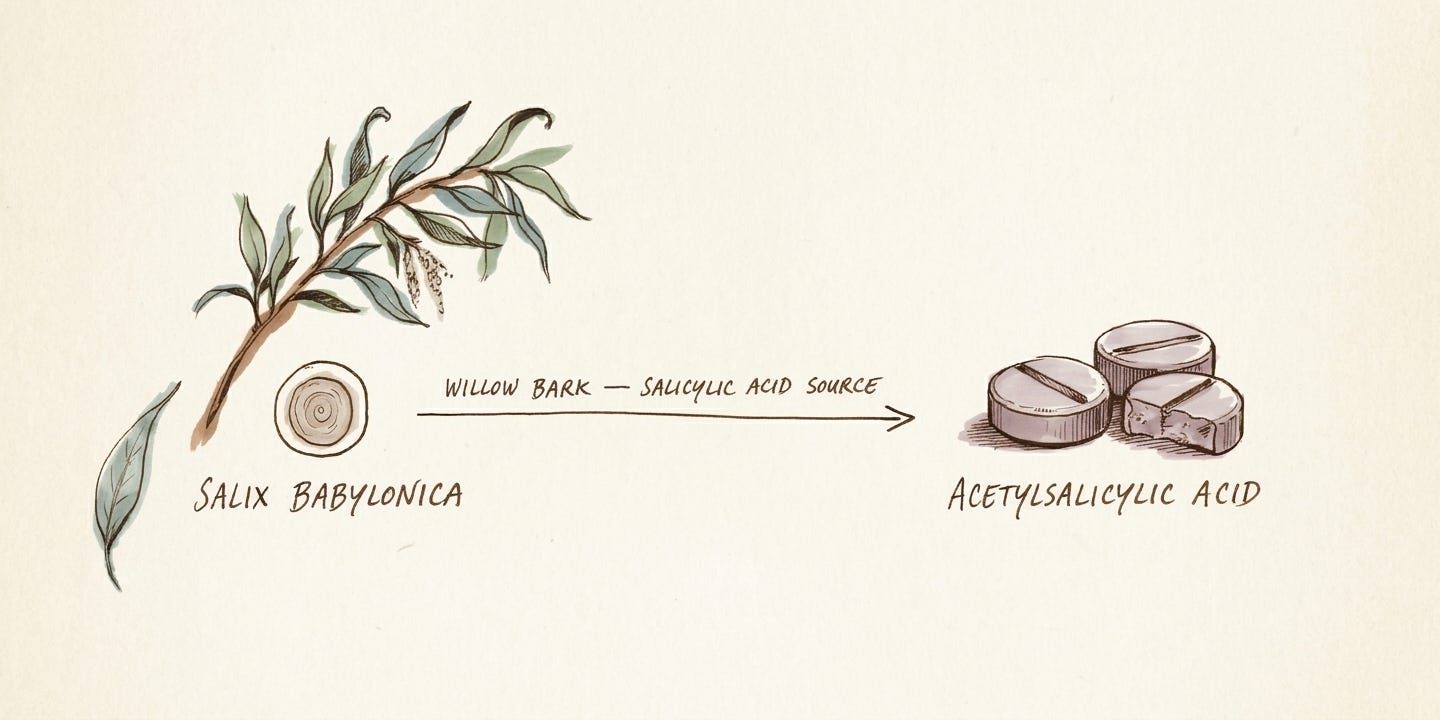
Ancient Egyptians used extracts from the willow plant as an anti-inflammatory and pain reliever around 1300 to 1500 BCE. The knowledge spread to the Babylonians around 600 BCE, to the Chinese around 500 BCE, to the ancient Greeks around 400 BCE. Multiple civilizations across thousands of years, with no contact with each other, independently found the same tree and figured out the same thing. The bark works. Boil it into a tea. Drink it. The pain goes down.
None of them got the patent.
In 1827, a German chemist named Johann Andreas Buchner extracted and isolated the active compound in willow bark and called it salicylic acid. In 1853, a French chemist named Charles Gerhardt manufactured acetylsalicylic acid from it. The compound was getting closer to its modern form, but it was still too harsh on the stomach to use reliably. It needed one more modification. That modification came from a chemist named Felix Hoffmann, working at a German pharmaceutical company called Bayer.
On August 10, 1897, Hoffmann succeeded in producing a stable version of acetylsalicylic acid that didn’t destroy the stomach lining. Bayer named it aspirin, patented it, and marketed it around the world. Three thousand five hundred years of human civilization had been circling this compound without being able to refine it. Now it was a Bayer product.
That’s not even the insane part.