

Sugar Was Medicine Before It Was Food
The thing that everyone puts in their tea or coffee actually used to require a prescription… kinda.
Sugar first appears in Roman and Greek medical records as a treatment for things like indigestion and stomach ailments. When it reached England in the 12th century, it was sold in apothecaries with medicine, classified not as food but as a spice, used to treat fevers, coughs, and sometimes even chapped lips...as messy as that probably would be. By the medieval period, it was considered comparable to things like musk and pearls. A physician writing in 1800 noted that sugar couldn’t have been expected to escape the apothecary’s shop until the amount they had available was sufficient for luxury, and the price low enough for common people to afford it as food.
For most of human history, that price never really dropped. Then the British Empire decided to make it drop.
Sugar cane was first domesticated in New Guinea around 8000 BC. The indigenous peoples there selectively bred wild canes over generations to be softer and sweeter stalks for their gardens. A major technological leap happened in India during the Gupta Empire around 350 AD, when people discovered how to crystallize sugar. The Sanskrit word was “śarkarā,” which is where the word sugar comes from. From India it moved through Persia, through the Arab world, and eventually it reached Europe through the Crusades. It became a luxury so rare that in 1319 it was priced at two shillings a pound in London, which was roughly $50 per pound today.
For four hundred years after that, sugar sat behind the apothecary counter while most of Europe sweetened its food with honey. The wealthy used small quantities of it to display status. Kings had sugar sculptures made for their banquets. Nobody poured it into tea by the spoonful because nobody could really afford to.
But then… Britain went to the Caribbean.
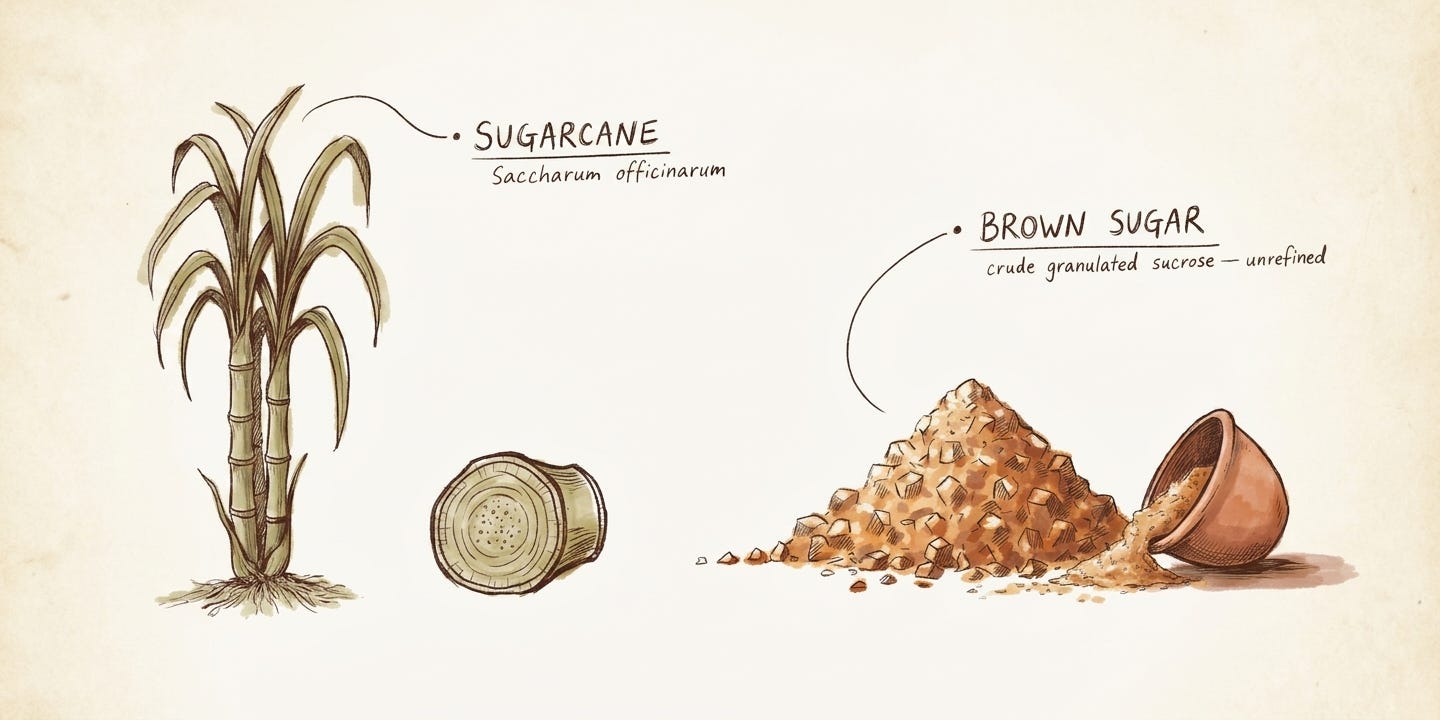
The price of sugar dropped after New World plantation imports began to dominate the market in the mid-sixteenth century. The entire mechanism was pretty straightforward. About four million enslaved Africans were brought to the Caribbean, and almost all ended up on the sugar plantations. Forced labor made production cheap. Cheap production made sugar available. Available sugar made it a mass commodity for the first time in ten thousand years of human history.
Britain’s annual per capita consumption of sugar was 4 pounds in 1704, 18 pounds in 1800, and 90 pounds in 1901. A 22-fold increase in two centuries, to the point where Britons had the highest sugar intake in Europe. Every pound of that increase was made possible by the same system. Enslaved workers on Caribbean sugar plantations were required to work 18-hour days, receiving only minimal food, clothing, and shelter. Their life expectancy was seven to eight years. With many of them barley making it to that.
The historian Sidney Mintz put it plainly… in 1000 AD, few Europeans knew sugar existed. By 1650, the English nobility ate it constantly and used it in their medicine. By 1800, it had become a necessity in the diet of every English person. By 1900, it was supplying nearly one-fifth of all calories in the English diet.
One-fifth of ALL calories. From a plant that a physician living in the year 1700 would have recognized as medicine.
That transition from apothecary to grocery shelf took only about 150 years. It reshaped the agriculture, the demographics, and the entire food culture of the Caribbean. And at the end of it, the British had the sweetest diet in Europe and the lowest sugar prices in history.
Sugar’s transition from a rare foreign luxury for the elite to an ordinary sprinkle that we know today traces the historical progression of Western industry.
Which is pretty insane.
Sources
The Sugar Association. “History of Sugar.” https://www.sugar.org/sugar/history/
The National Archives (UK). “Sugar.” https://www.nationalarchives.gov.uk/education/resources/sugar/
Biology Insights. “Sugar Cane Origin: A Global History.” https://biologyinsights.com/sugar-cane-origin-a-global-history/
Era Journal. “Bittersweet: Britain’s Sticky History with Sugar.” https://erajournal.co.uk/rose-gabbertas/bittersweet-britains-sticky-history-with-sugar/
Chocolate Class / Harvard. “One Thousand Years of Sugar.” https://chocolateclass.wordpress.com/2019/03/15/one-thousand-years-of-sugar-the-transition-from-medicine-and-elite-consumption-to-everyday-life-in-great-britain/
Chocolate Class / Harvard. “The Rise in British Sugar Consumption.” https://chocolateclass.wordpress.com/2020/03/25/sugar-sugar-sugar-the-rise-in-british-sugar-consumption/
University of Oxford, Faculty of History. “How England Became the Sweetshop of Europe.” https://www.history.ox.ac.uk/article/how-england-became-the-sweetshop-of-europe
Moseley, Benjamin. A Treatise on Sugar. (1800). Columbia University. https://edblogs.columbia.edu/20221engl3389w001/?p=83
Mintz, Sidney W. Sweetness and Power: The Place of Sugar in Modern History. Penguin, 1985.