

The Banana That Vanished
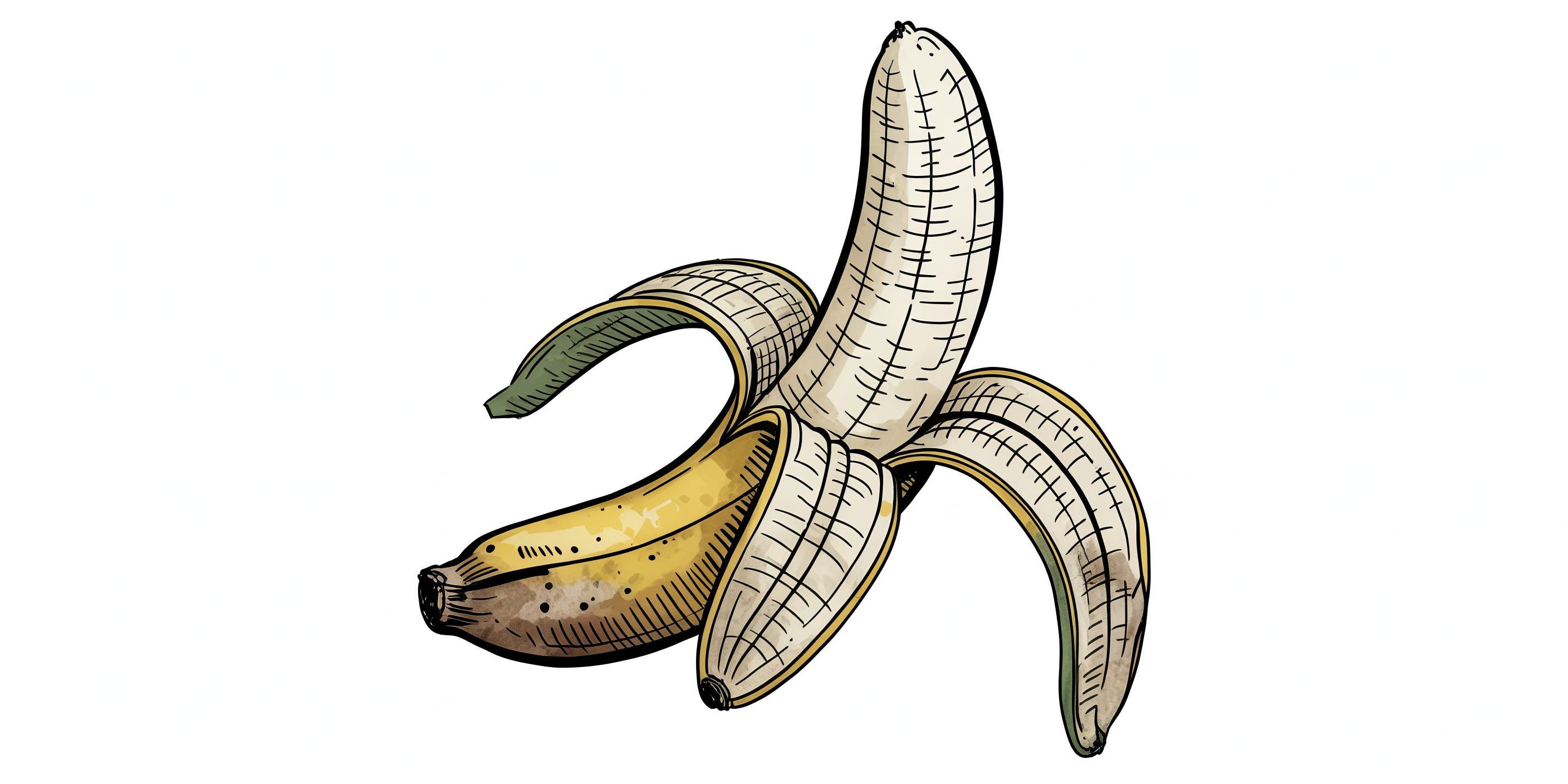
Most of you have never tasted a real banana… Kinda.
I’m not being dramatic. The banana you eat is not the banana your grandparents ate. The one they remember was called the Gros Michel. It tasted much different and it had a much stronger smell. If you’ve ever eaten a banana-flavored candy or drank a banana-flavored smoothie, that artificial flavor was designed to taste like a banana that doesn’t exist anymore… mostly.
We quite literally loved it to death. And we’re pretty close to doing it again.
The Gros Michel, sometimes called “Big Mike,” wasn’t just another banana. It was THE banana. The thick skin that survived shipping, dense clusters that packed easily, and a flavor so distinctive that food scientists would later replicate it with a single compound called isoamyl acetate... (It took me a while to figure out what this was) If you’ve ever smelled banana Laffy Taffy, you’ve pretty much smelled a ghost of the Gros Michel.
By the early 20th century, the demand for this banana exploded. The United Fruit Company, a Boston-based corporation so powerful it was called “El Pulpo” (the Octopus), planted Gros Michel across hundreds of thousands of acres in Central America . They built railroads, ports, and entire company towns. They controlled governments. They turned countries like Honduras and Guatemala into what we now call “banana republics” . All for a single fruit.
Here’s the problem with that. Every single Gros Michel plant was a clone . Bananas don’t grow from seeds. You plant a piece of the stem, and it grows an exact genetic copy of its parent. That means every Gros Michel in every plantation across Central America was essentially the same plant. The same strengths. The same weaknesses.
And a fungus found that weakness.
Fusarium wilt, also known as Panama disease, is caused by a soil fungus called Fusarium oxysporum f. sp. cubense . One strain, called Race 1, attacked the Gros Michel. The fungus traveled through soil, water, and infected plant material. It spread through boots, tools, machinery, and even floodwaters . Once it hit a plantation, the plants turned yellow, then brown, then rotted from the inside out. The fields became unusable, sometimes for decades.
The United Fruit Company couldn’t stop it. By the 1950s, the Gros Michel was commercially extinct. The banana that had built an empire was gone.
The industry scrambled for a bit and found a replacement that most people eat today: the Cavendish. Less flavorful, less creamy, and more prone to bruising. But it was resistant to the fungus that killed the Gros Michel . So by the 1960s, the Cavendish had taken over. Which is why today, it accounts for about 99 percent of the bananas sold in the Western world .
And I kid you not… we grow it the exact same way. Monoculture. Clones. Every Cavendish is a genetic copy of every other Cavendish.
Here’s where it gets actually insane… The fungus evolved.
