

The Cinnamon Myth
For two thousand years, nobody in Europe knew where cinnamon came from.
Not the Greeks... Not the Romans…. Not even the Egyptians, who had been using it to embalm their pharaohs since 2000 BC. Cinnamon was carried to Egypt as early as 2000 BC by merchants who, while trading throughout the Middle East and Arabia, kept their Sri Lankan source a secret. The entire Western world was buying a spice from an island they didn’t even know existed, through traders who had invented an elaborate myth to make sure they never found out.
The mythology worked for more than fifteen hundred years.
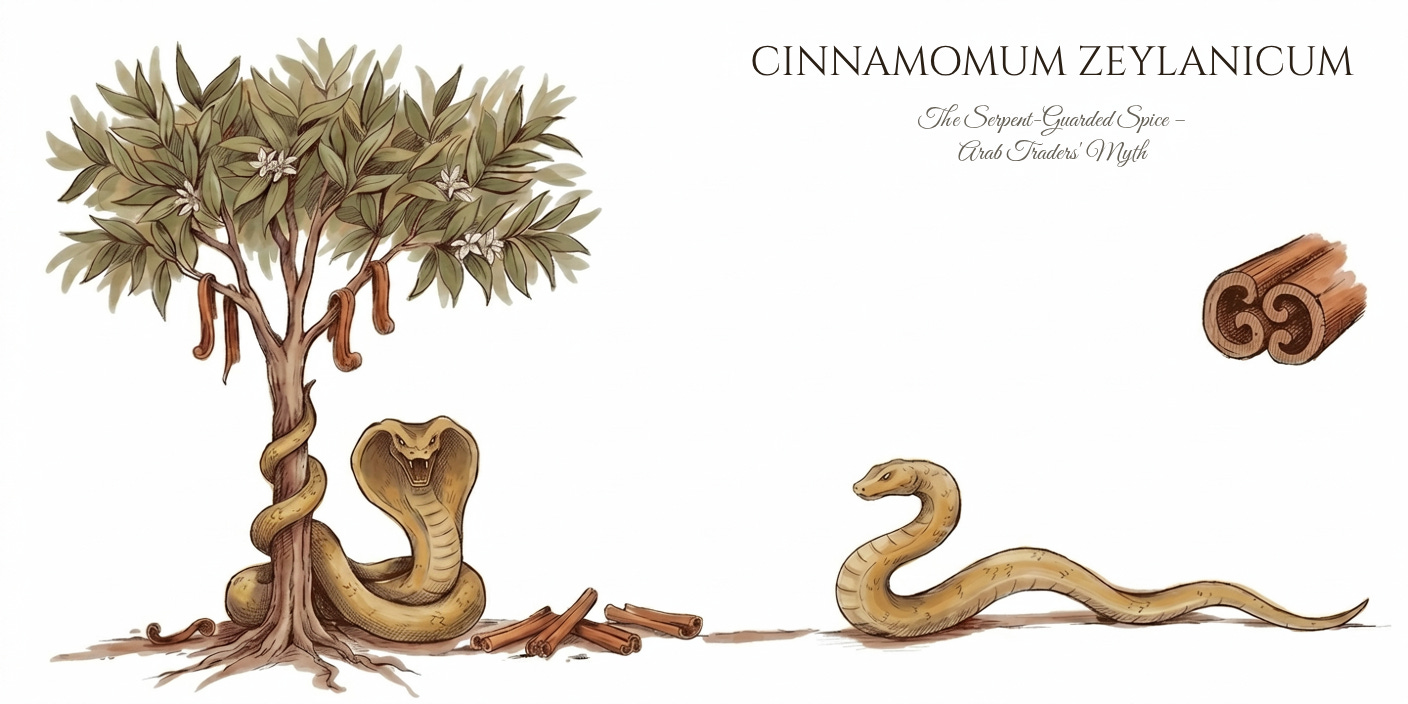
Herodotus, the Greek historian writing around 430 BCE, recorded in full detail exactly how cinnamon was obtained. Giant birds, he wrote, collected cinnamon sticks from an unknown land and carried them to nests built on sheer cliffs. Arab traders would leave enormous chunks of raw meat near the base of these cliffs. The birds would fly down, load themselves with meat, and the weight would collapse the nests. The cinnamon sticks would fall to the ground and the traders would collect them.
That’s what the most respected historian in the ancient world believed. Giant birds. Cliff nests. Meat…
The story wasn’t an accident, arab traders made up these stories specifically to protect their monopoly, using myths about cinnamologus birds and winged serpents to justify markups of 300 to 500 percent to European buyers. The actual source, the island of Sri Lanka, sat in plain sight in the Indian Ocean. The traders simply just never mentioned it. And because nobody else had ships capable of going to find out, the story of the giant birds stood as the accepted explanation for cinnamon’s origins for century after century after century…
Keep reading with a 7-day free trial
Subscribe to The Insane Archive to keep reading this post and get 7 days of free access to the full post archives.