

The Crop That Makes Water Taste Sweet
Your tongue has a secret, and an artichoke is the only vegetable that knows how to find it.
Somewhere inside your mouth right now, sitting on the surface of your taste buds, are proteins called sweet receptors. Their job is to detect sugar molecules, bind to them, and send a signal to your brain that says sweet. They do this thousands of times a day, every time you eat or drink anything with any sweetness in it, so automatically and so constantly. Artichokes found a way in.
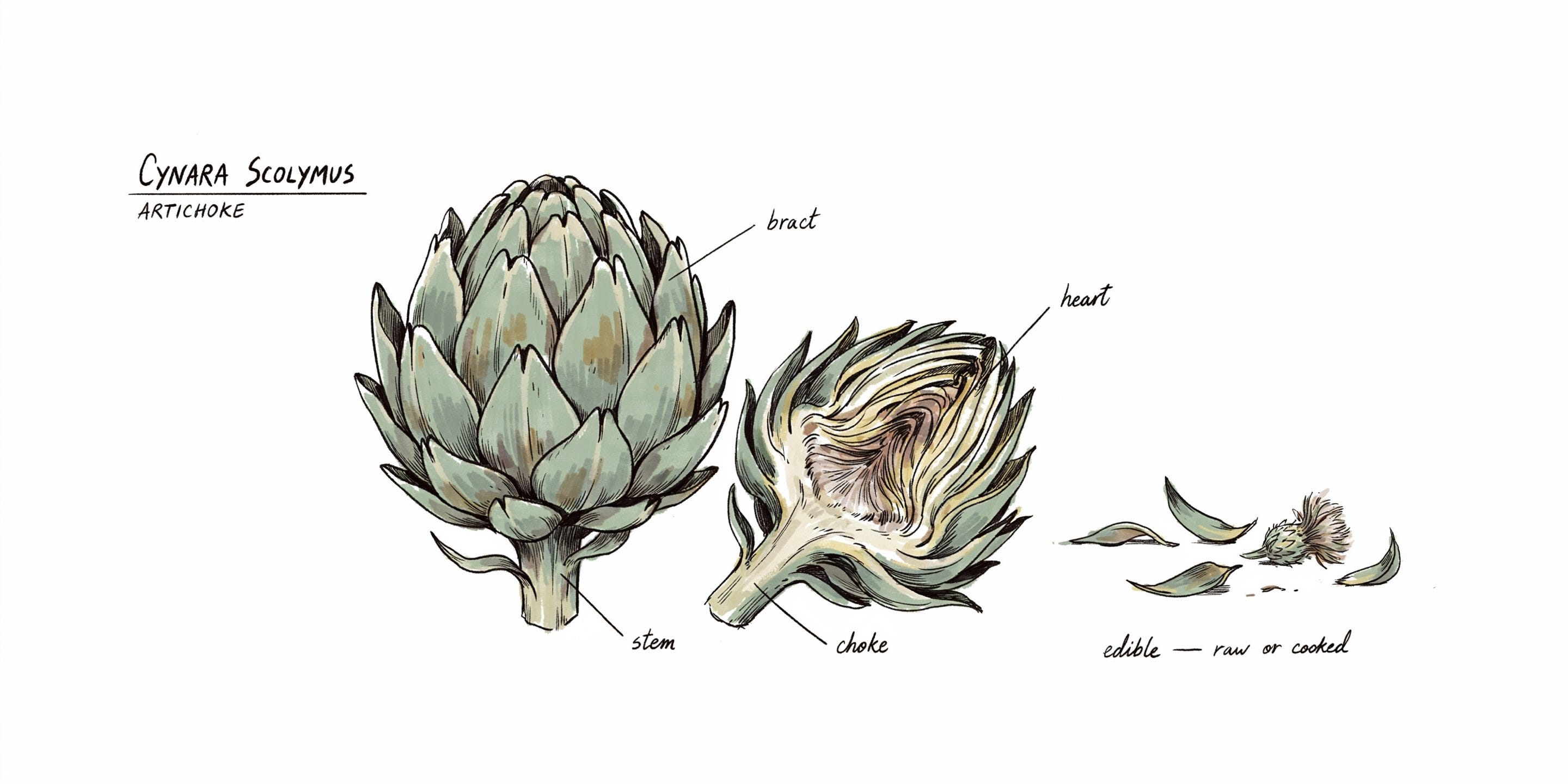
A compound in artichokes called cynarin latches directly onto those sweet receptors without activating them. It sits there, occupying the binding site, blocking any sweetness signal from reaching your brain. While cynarin is sitting on your sweet receptors, your brain gets no sweetness signal from them at all, even from things that are genuinely sweet.
Then you take a sip of water.
The water washes the cynarin molecules off the receptors. They’ve been suppressed for however long you were eating the artichoke, and now they flood back all at once. Your brain interprets the sudden reactivation as a burst of sweetness, a phantom sugar hit from a liquid that contains no sugar at all. Water tastes sweet. Wine tastes sweeter than it actually is. The next bite of whatever you eat gets a sweetness boost it didn’t earn.
Scientists first documented this in a formal setting in 1935, when geneticist Dr. Albert Blakeslee served artichokes as an appetizer to 250 biologists at a dinner party and recorded what happened. Sixty percent of them reported that water tasted sweet after eating the artichoke. The other 40% noticed nothing unusual. Blakeslee noted the difference but couldn’t explain it. The effect didn’t have a name yet.
It took until 1972 for Dr. Linda Bartoshuk and her colleagues to publish the mechanism in the journal Science, identifying cynarin specifically as the compound responsible and documenting exactly what it does to the sweet taste receptor. The paper confirmed something that cooks had been noticing for centuries without being able to explain: artichokes make everything taste different, and they do it invisibly, while you’re eating them, before you’ve taken a single sip of anything.
...Sixty percent of the biologists at that 1935 dinner party noticed something was happening to their water. Forty percent noticed nothing. That split isn’t random. Scientists believe it comes down to individual variation in taste receptor sensitivity. Some people carry more sweet receptors, or more sensitive ones, making them dramatically more susceptible to the cynarin effect. The same artichoke at the same dinner table tastes fundamentally different to the person sitting next to you, and neither of you knows it.
This is why artichokes are the one vegetable sommeliers genuinely fear. A dry wine paired with an artichoke course can taste inexplicably sweet to 60% of the table. A balanced wine can tip into cloying. The cynarin effect lasts four to five minutes after each bite, long enough to affect every sip taken during a meal course, and there’s no way to turn it off once it starts. The only solution wine professionals have found is to lean into it: pair artichokes with wines so dry and mineral that the cynarin-induced sweetness boost improves them rather than ruining them.
The artichoke’s been doing this for as long as people have been eating it. It’s been in the Mediterranean diet for thousands of years, in Italian antipasto, in French braise, in Greek stew, making wine taste strange and water taste sweet and the meal around it taste like something it isn’t. Nobody knew why until 1972. Most people eating artichokes right now still don’t know why.
Their sweet receptors are being occupied without their knowledge.
The artichoke found them first.
Which is pretty insane.
Sources
Academia.edu / Research Paper. “Sweet Taste of Water Induced by Artichoke (Cynara scolymus).” https://www.academia.edu/124428696/Sweet_Taste_of_Water_Induced_by_Artichoke_Cynara_scolymus_
Reader’s Digest Canada. “How to Trick Your Taste Buds: The Surprising Science of Flavours.” https://www.readersdigest.ca/food/cooking-tips/4-surprising-foods-trick-taste-buds/
Things We Don’t Know. “The Sweet Taste of Unknown.” https://blog.thingswedontknow.com/2021/01/the-sweet-taste-of-unknown/
Springer / Journal of Physiological Anthropology. “Pairing Flavours and the Temporal Order of Tasting.” https://link.springer.com/content/pdf/10.1186/s13411-017-0053-0.pdf
Specialty Produce. “Cocktail Artichokes Information and Facts.” https://specialtyproduce.com/produce/Cocktail_Artichokes_2017.php
The Kitchn. “Food Science: Artichokes and Sweetness.” https://www.thekitchn.com/food-science-artichokes-and-sw-80499
Paste Magazine. “8 Foods Resistant to Wine Pairing.” https://www.pastemagazine.com/food/wine/8-foods-resistant-to-wine-pairing-and-what-to-pair
The Daily Meal. “A Sommelier Explains Why It’s So Difficult To Pair Artichokes With Wine.” https://www.thedailymeal.com/1537119/why-its-hard-pairing-artichokes-wine/
Armchair Sommelier. “The Iron Chef’s Artichokes Wine Pairing.” https://armchairsommelier.com/food-and-pairings/artichokes-wine-pairing/
PsychoTropical. “Taste, Wine, Food, and Combinations.” https://www.psychotropical.com/taste-wine-food-and-combinations-advances-and-insights-from-science/