

The Fake Tomato That Never Stopped Producing
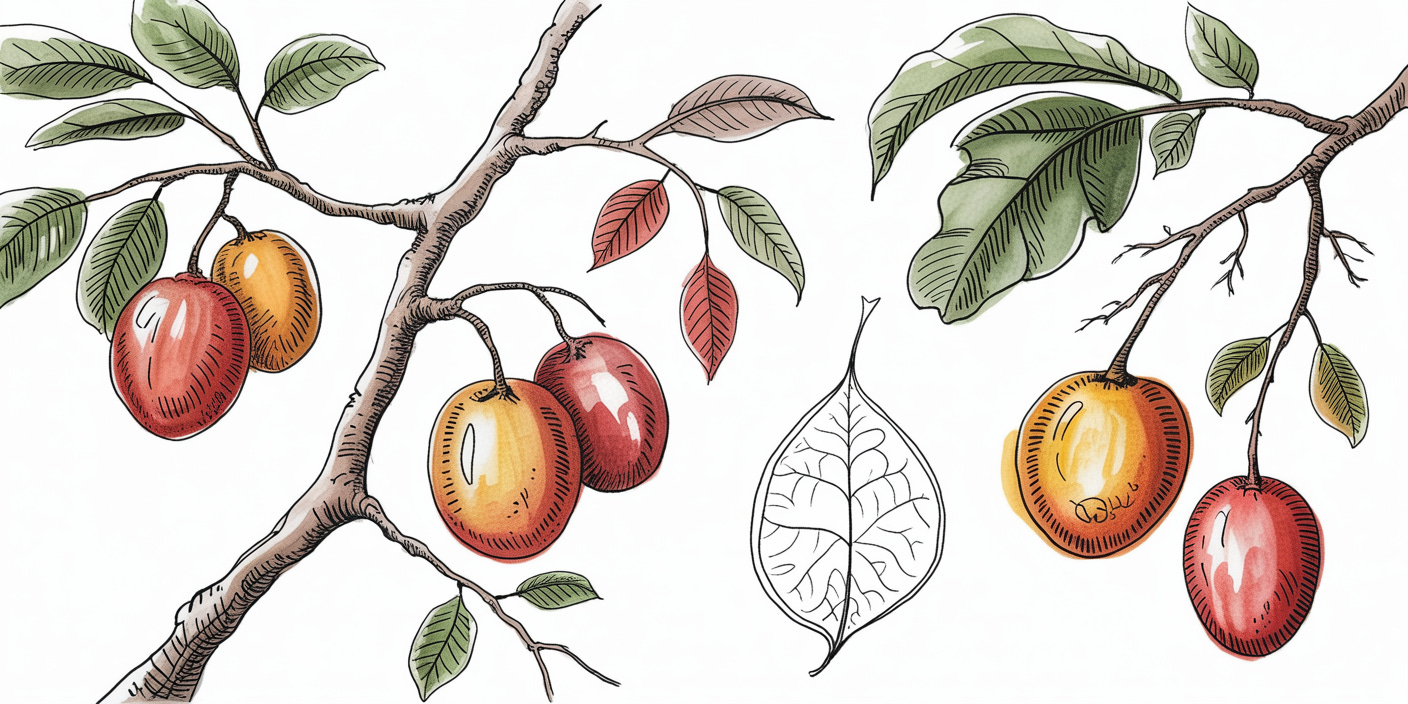
The tree tomato is one of the only fruit trees that doesn’t go dormant. It keeps producing when everything else stops. While other plants cycle through winter rest, the tree tomato just keeps going. That’s why the people in the Andes relied on it as a year-round crop for centuries.
It originated in the high-altitude Andes, likely in Peru or Bolivia. The exact range runs from Venezuela to northern Argentina, but the center of domestication appears to be the Andean highlands where it’s been cultivated for over 2,000 years.¹ Short growing seasons and unpredictable frosts forced plants to adapt or die. The tree tomato did something unusual. It developed what botanists call a “prolonged flowering period.” Instead of flowering once and setting fruit in a single burst, it flowers continuously over several months. A single tree can produce fruit for 10 to 12 months out of the year in ideal conditions.²
The mechanism is tied to altitude. In the high Andes, temperatures can swing from warm days to near-freezing nights even during the so-called growing season. A tree that flowers once risks losing everything to a single frost. A tree that flowers continuously hedges its bets. Some flowers set fruit, some get killed by cold, but the tree keeps producing regardless. The fruit itself grows in clusters, ripening gradually over several months rather than all at once. You harvest what you need and leave the rest on the branch.³
When the Spanish took over the region in the 16th century, they replaced tree tomato orchards with European crops that only fruited once a year. Wheat. Barley. Apples. Pears. These crops were familiar. They fit the colonial agricultural model that prioritized export over local food security. The tree tomato was pushed to the margins, grown in small family plots instead of the large orchards that once fed Andean communities.⁴
By the time scientists realized how important year-round production was, industrial agriculture had already standardized around seasonal harvests. The problem was scale. A tree that produces fruit year-round sounds great until you try to industrialize it. Seasonal harvests are predictable. You know when to plant, when to harvest, when to process. Year-round production requires year-round labor, year-round processing, year-round distribution. Industrial agriculture in the 20th century was built for efficiency, not resilience. The tree tomato didn’t fit the model.⁵
It wasn’t until 1967 when New Zealand rebranded it as tamarillo to make it sound more exotic. The original name is tomate de árbol — tree tomato. Not exactly something that makes you want to put it in a fruit salad. New Zealand growers in the 1960s were trying to commercialize the fruit for export, and they needed a name that didn’t sound like a vegetable you’d put in a sauce. They held a competition. Tamarillo won. It was chosen for its novelty and its phonetic connection to “tomato” without being tomato.⁶
So it went from a tree that could feed people twelve months a year to a fruit most of you are just hearing about. A plant that figured out how to survive high-altitude frosts by never stopping production got replaced by crops that flower once and freeze. Then it got renamed to sound exotic enough for export. The year-round food became a curiosity.
Which is pretty insane.
Sources
National Research Council. (1989). Tamarillo (Cyphomandra betacea). In Lost Crops of the Incas: Little-Known Plants of the Andes with Promise for Worldwide Cultivation. National Academies Press. https://www.nap.edu/read/1398/chapter/13
Morton, J.F. (1987). Tamarillo. In Fruits of Warm Climates. Miami: J.F. Morton. pp. 428–430. https://hort.purdue.edu/newcrop/morton/tamarillo.html
Heiser, C.B. (1985). Of Plants and People. University of Oklahoma Press. pp. 87–92. https://archive.org/details/ofplantspeople0000heis
Gade, D.W. (1999). Nature and Culture in the Andes. University of Wisconsin Press. https://uwpress.wisc.edu/books/3249.htm
New Zealand Institute for Crop & Food Research. (1996). Tamarillo: A Guide for Growers.
https://www.plantandfood.co.nz
New Zealand Ministry for Primary Industries. (2023). “Tamarillo history.” https://www.mpi.govt.nz/agriculture/horticulture/fruit-and-veg/tamarillo