

The Fruit That Bought a Man
On July 2, 1766, George Washington sat at his desk at Mount Vernon and wrote to a ship captain named Joseph Thompson. The letter contained instructions for the sale of an enslaved man named Tom.
Washington was specific about what he wanted in return.
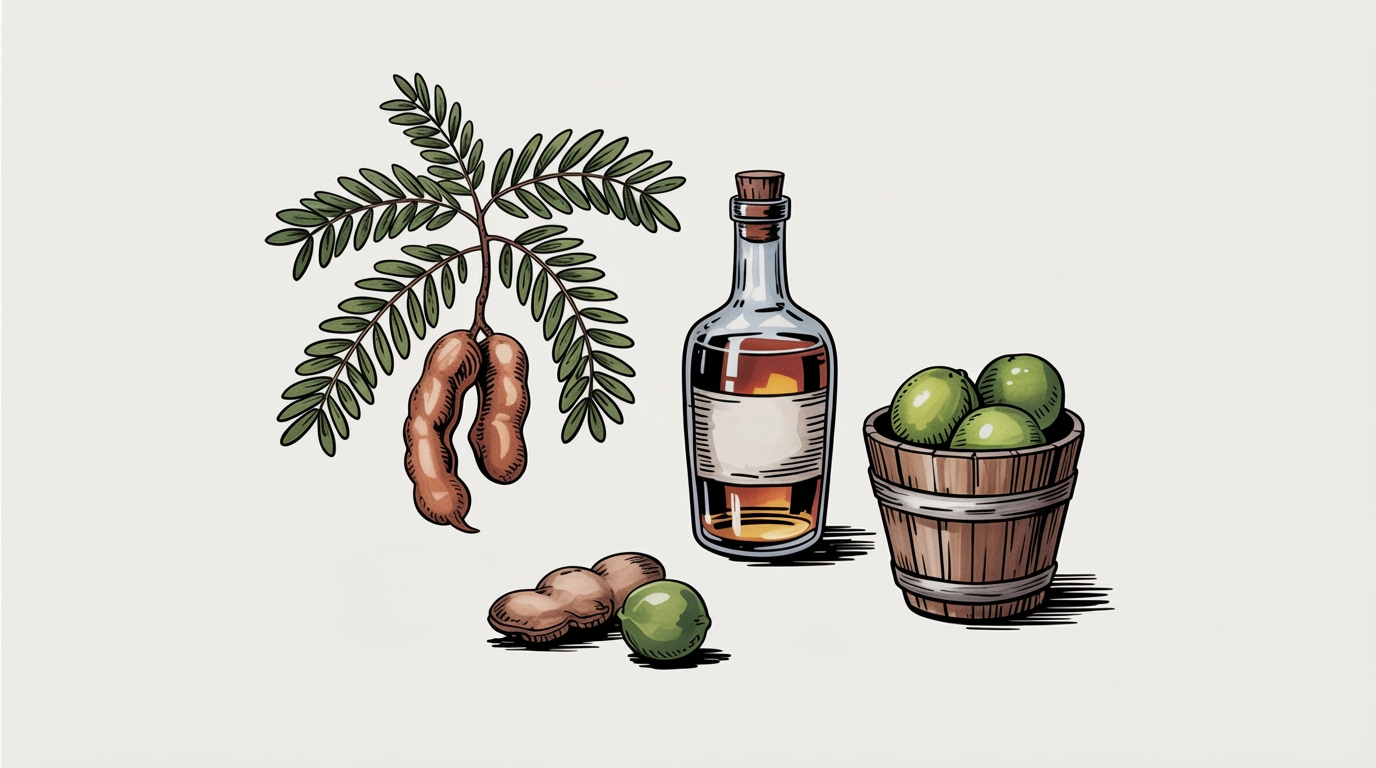
“If Tom, the fellow I am sending you, should not answer your expectation, or if you should not have an opportunity of disposing of him to advantage in any of the Islands, you may send him to me again; but I should be glad you could exchange him for one Hhd of best Molasses, one Ditto of best Rum, one Barrl of Lymes—if good & Cheap—one Pot of Tamarinds—contg about 10 lbs—two small Do of mixed Sweetmeats—abt 5 lb each—and the residue, much or little, in good old Spirits—which please to put in a Cask, and advise me of the cost & charges.”
The tamarind sits in the middle of that list. A pot of tamarinds, about ten pounds. Not the most expensive item. Not the most memorable. But Washington wanted it specifically enough to name it, alongside the molasses and the rum and the sweetmeats. A sour fruit from the other side of the world, made into a paste and shipped in a pot, became part of the price of a man.
The tamarind in that pot came from somewhere. It had its own journey. The fruit originated in tropical Africa, probably Sudan, and spread across the Indian Ocean through ancient trade routes. By the time Arab traders encountered it, they called it tamar al-Hind — “date of India” — because they got it from Indian ports. The name stuck even though the fruit was never from India. Portuguese traders carried it to the Americas in the 16th century, and by Washington’s time, tamarind was a familiar commodity in Atlantic ports. It was used in cooking, in medicine, and as a preservative. Ships carried it in pots and barrels, alongside sugar and rum and molasses.
Washington knew what tamarind was. He had ordered it before. In 1760, he requested tamarinds from London merchant Robert Cary, along with “a small cask of the best white wine vinegar” and other supplies. It was the kind of thing a wealthy Virginia planter kept in his pantry — imported, expensive, and status-signaling. A pot of tamarinds was not a necessity. It was a luxury. And on July 2, 1766, Washington decided that ten pounds of it would be part of the payment for Tom’s life.
Tom was not a stranger to Washington. He worked as a foreman on River Farm, one of Washington’s outlying properties. Washington described him to Thompson: “He is both a Rogue & Runaway, but by no means remarkable for the former, and never practised the latter till of late; the whole neighbourhood can testifie, & particularly Mr Johnson and his Son, who have both had him under them as foreman of the gang; he is exceeding healthy, strong, and good at the Hoe.”
Tom had tried to run away. That was his crime. Washington added a detail: Tom was “by no means remarkable” for being a rogue and had never run away before “till of late.” Something had changed. Washington does not say what. He does not ask. He just sells.
He also gave Thompson advice on how to make Tom sellable…
