

The Fruit That's So Bitter They Named It After Struggle
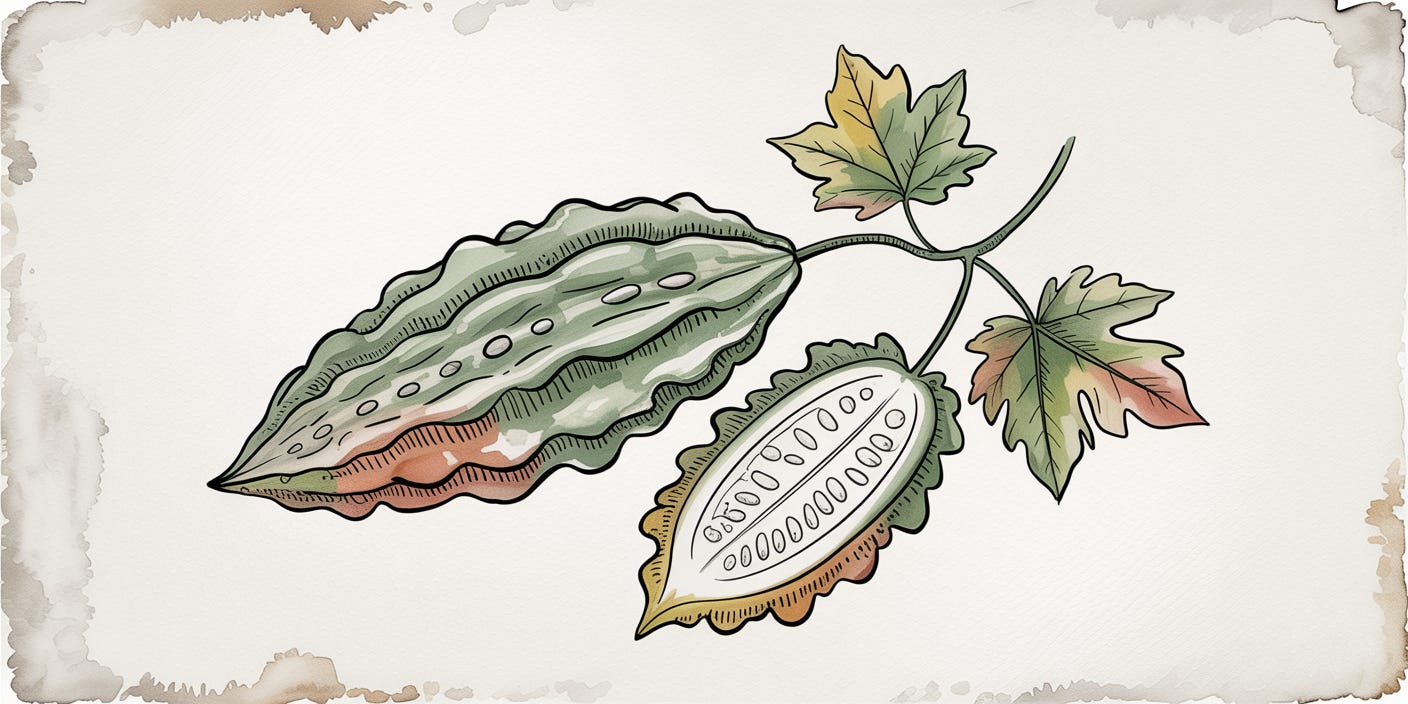
One of the worst tasting fruits in the entire world could actually save your life.
It’s a warty, bumpy green gourd that belongs to the same family as pumpkins and cucumbers, but it looks nothing like either. Some varieties are six to ten centimeters long. Others are bigger. All of them are covered in knobby protrusions that make them look like something from another planet.
Bitter melon was first domesticated in either India or East Africa. The exact origin is debated. Some sources say it originated in India, specifically the Indo-Burman region. Others point to tropical Africa. What’s clear is that it’s been cultivated for centuries, maybe millennia, and from there it quietly made its way across Asia and the Caribbean. It reached China in the 14th century. It spread to Malaysia, Thailand, Vietnam, and eventually the Americas through Portuguese and Spanish trade routes. Now it’s grown everywhere from India to Brazil, from the Caribbean to the Philippines.
Bitter melon has a compound called polypeptide-p that can actually mimic insulin. It’s sometimes called “plant insulin” because its structure resembles bovine insulin. A 2023 review in the International Journal of Nutrition confirmed that polypeptide-p is one of several bioactive compounds in bitter melon that contribute to its hypoglycemic effects. Others include charantin, momordicin, and vicine, all of which work through different pathways to lower blood sugar.
For centuries, traditional Chinese medicine used it to help manage people’s blood sugar levels. The practice goes back thousands of years, long before anyone knew what insulin was. They just knew it worked. And modern science has caught up. Clinical studies have shown that bitter melon extract can reduce fasting blood glucose and even lower A1C in patients with type 2 diabetes.
In Okinawa, where some of the longest living people in the world live, it’s called goya. Okinawa has one of the highest concentrations of centenarians on earth, and goya is a staple of their diet. They usually stir fry it with eggs in a dish called goya champuru. “Champuru” means stir fry mix. The dish also includes firm tofu, sometimes pork, and it’s eaten regularly, especially in summer. The locals say they can eat it several times a day.
The bitterness is actually so bad that in Vietnam, the fruit is called “khổ qua,” which means “passing through bitterness” or “struggle.” The name is kinda poetic. “Khổ” means hardship, “qua” means over. Together, they mean hardship is over. During Vietnamese New Year, families serve bitter melon soup so that all the hardship can be swallowed, allowing them to expect an easy going year to come. They stuff the melon with ground pork, woodear mushrooms, and cellophane noodles, then simmer it in broth. The bitterness cuts through the richness, and the meaning cuts through the celebration.
But even through the bitterness, it’s actually really common to eat. From Okinawa to Vietnam, from India to the Caribbean, people have found ways to cook it, pickle it, stuff it, and fry it. They balance it with eggs, pork, tofu, and salt. They name it after struggle and eat it to overcome.
A fruit that looks like it fell to earth. That tastes like regret. That can lower your blood sugar and help you live longer. That entire cultures have built their cuisine around despite the flavor.
Which is… pretty insane.