

The Grape That Cloned Itself Across the Planet
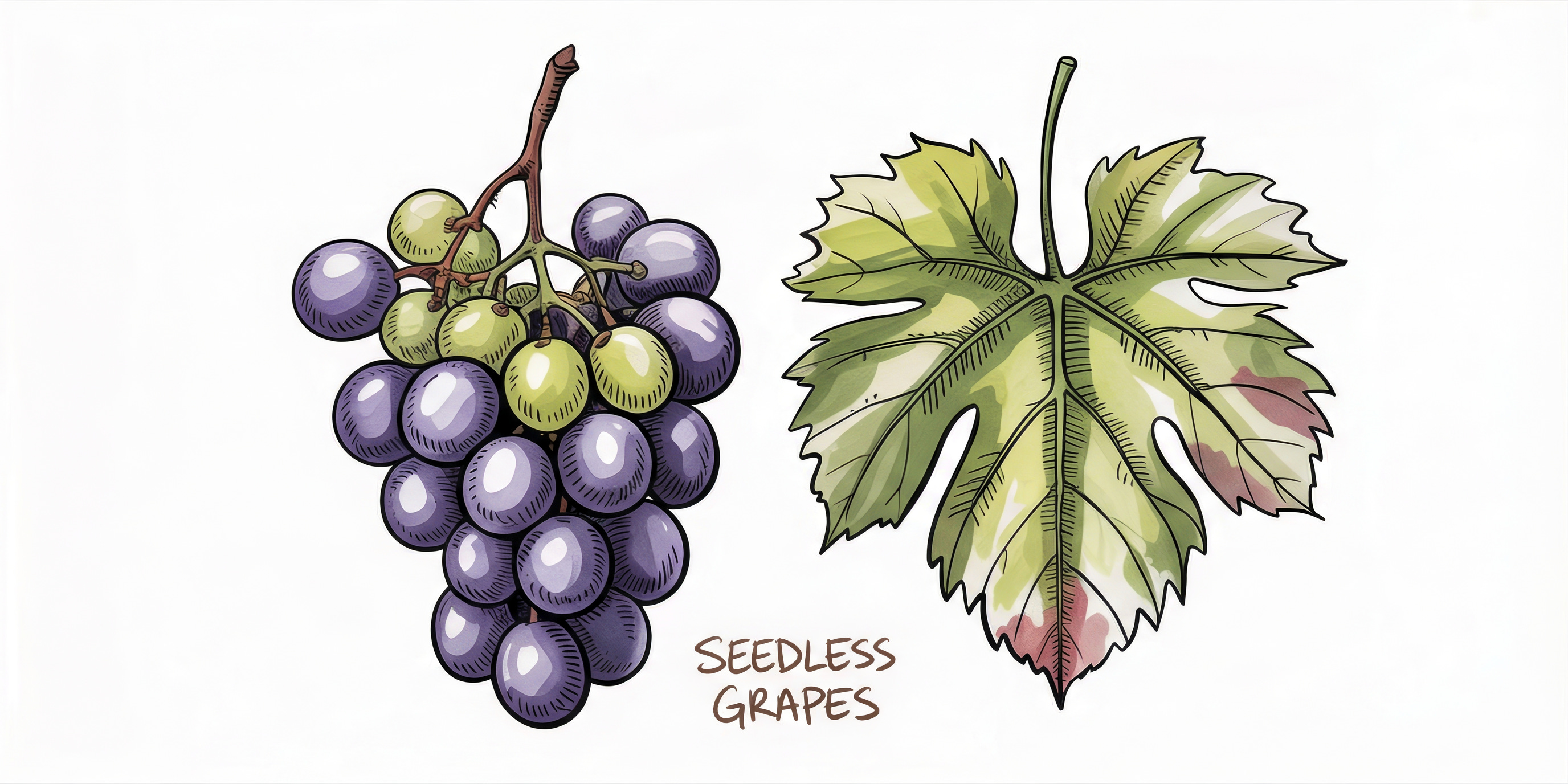
Every single seedless grape you’ve ever eaten is a clone. Not metaphorically. Genetically identical copies of one vine that refused to die.
Most of the grapes in your fridge trace back to a single mutant plant found somewhere in the Eastern Mediterranean region, probably in what’s now Turkey or Iran.¹ The exact origin is fuzzy. What isn’t fuzzy is what happened next.
In 1872, a man named William Thompson was farming in Sutter County, California. He sent east to a nursery in Rochester, New York, and ordered cuttings of a variety called Lady De Coverly. Only one cutting survived.² Thompson planted it, grafted it onto rootstock, and by 1875 harvested fifty pounds of thin skinned, intensely sweet, completely seedless grapes.³
He gave cuttings away to neighbors. One friend planted two hundred acres. By 1920, Thompson’s grape had replaced every other raisin variety in California.⁴
Today, that one vine’s descendants account for roughly ninety five percent of all raisins produced in the state.⁵ The Thompson Seedless. Named for the man who imported it. Not the civilization that discovered it.
Here’s the part that doesn’t make sense biologically. Seedless grapes can’t reproduce.
