

The Italian Bean That Came From Colombia
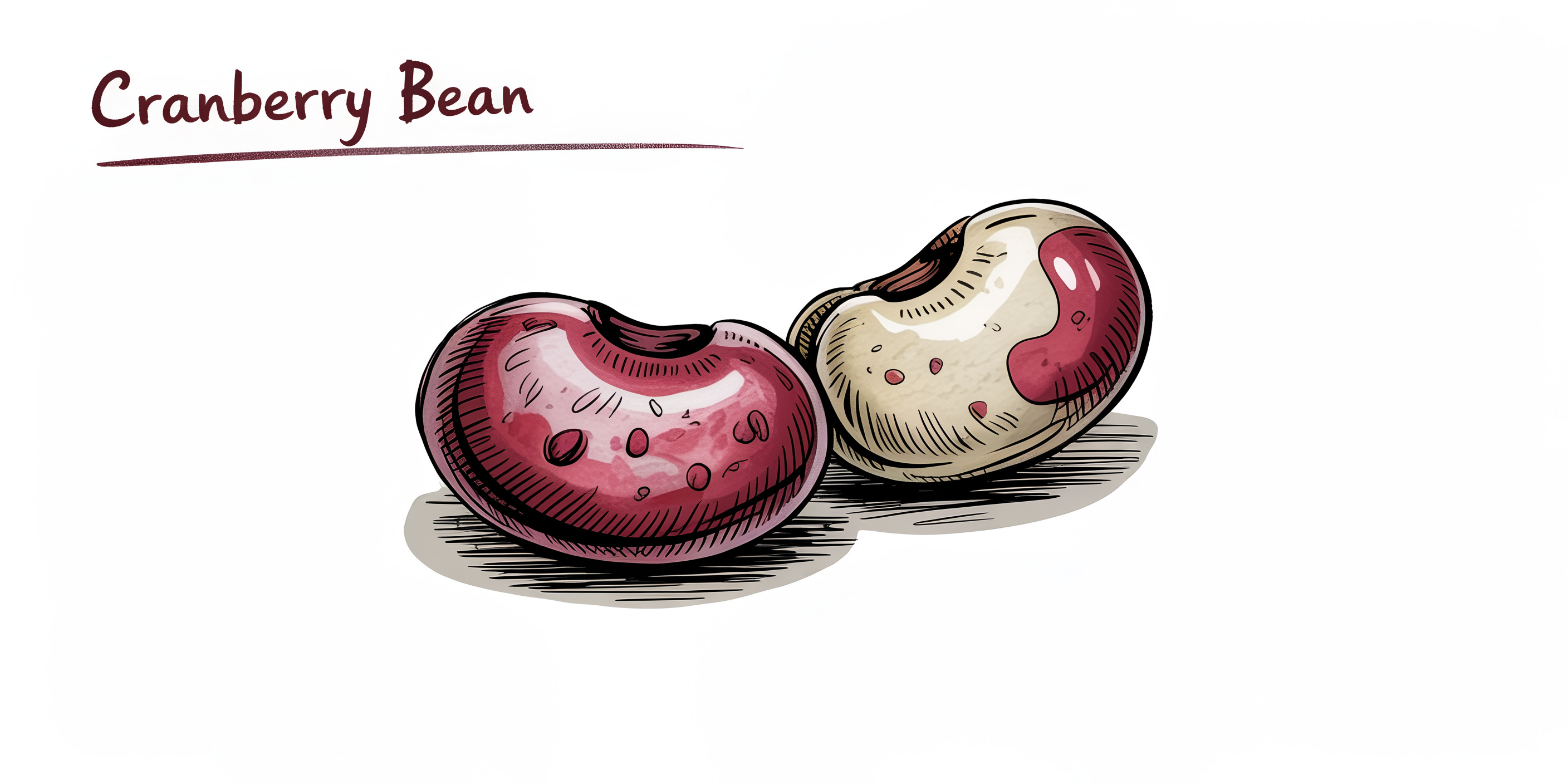
One of the world’s most Italian foods that shouldn’t be Italian is the cranberry bean.
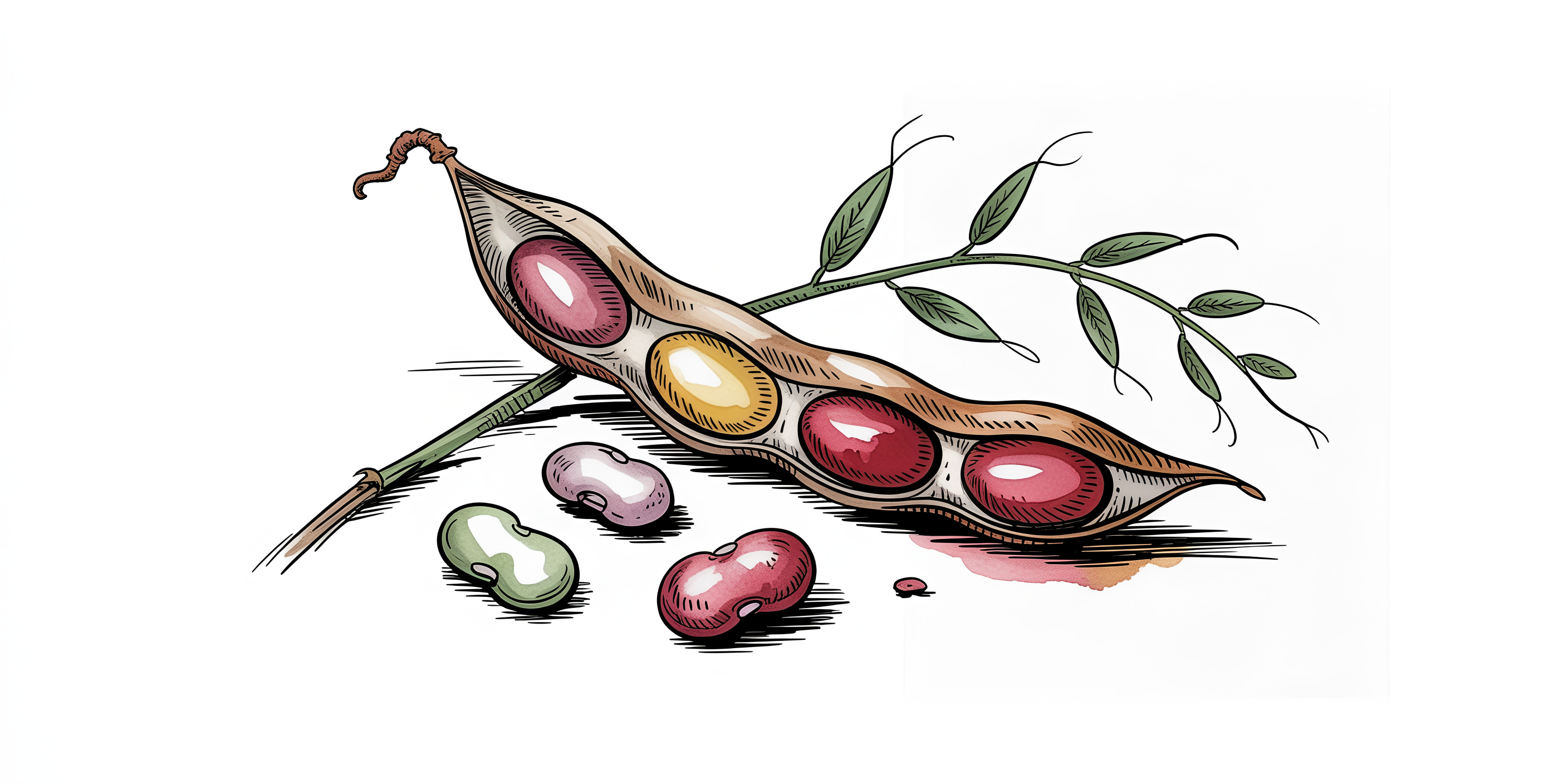
These are some of the most beautiful beans in the world. Medium to large tan or hazelnut colored, splashed or streaked with red, magenta, or black on a creamy white background.¹ The pods themselves are equally striking, bright pink and cream when fresh.² When cooked, the colors fade to brown, but the creamy, nutty flavor remains.³
Cranberry beans originated in the Americas. They were first bred in Colombia as the cargamanto.⁴ The bean was cultivated by Indigenous peoples thousands of years ago, long before European contact.⁵ When Spanish and Portuguese explorers encountered them in the early 1500s, they brought the beans back across the Atlantic.⁶
They arrived at a time when Europe’s old standby, the fava bean, was facing challenges. Fava beans had been cultivated in Europe for over 10,000 years.⁷ They were a dietary staple across the Mediterranean, planted in autumn in mild climates and spring in colder regions.⁸ But fava beans are susceptible to multiple fungal diseases, including ascochyta blight, chocolate spot, and rust.⁹ They’re also affected by favism, a genetic condition primarily in Mediterranean populations where eating fava beans triggers severe anemia.¹⁰
The beans cultivated in Europe before the Columbian Exchange were all of Asian origin and unrelated to New World Phaseolus species.¹¹ When common beans arrived from the Americas around 1492, they were described by explorers almost immediately.¹² The first recognized illustration of common bean in Europe appeared in Fuchs’ Di Historia Stirpium in 1542, fifty years after beans were observed in the Caribbean.¹³
In many places, food shortages were common. When ships brought back this new bean, European farmers decided to take a risk on it. Cranberry beans, like all Phaseolus vulgaris varieties, could grow well in soils and conditions where other crops struggled.¹⁴ They were adapted to moderate temperatures and precipitation.¹⁵ They fixed nitrogen in the soil, enriching it for future crops.¹⁶
Landowners started calling New World beans including cranberries the “bean of the poor,” partly because they were cheap and filled empty stomachs. The beans were reliable. They gradually took over the role fava beans had played in many dishes across Italy.¹⁷
The borlotti variety was bred in Italy specifically to have a thicker skin than the original cranberry bean.¹⁸ Different regions developed their own named varieties. Borlotti Lamon from the town of Lamon in Veneto, northwest of Venice.¹⁹ Borlotti Stregoni. Saluggia beans from Saluggia in northern Italy, where they’ve been grown since the early 1900s.²⁰
People renamed it borlotti and treated it like a local crop. It became the bean for pasta e fagioli, for soups and stews across northern Italy.²¹ Borlotti became so associated with Italian cuisine that most people assume it’s native.²² Over time, most people forgot that it had ever crossed an ocean at all.
Which means one of the most iconic ingredients in Italian cooking, the bean that defines pasta e fagioli and countless regional dishes, came from Colombia about 500 years ago and replaced European fava beans that had been cultivated for millennia.
The cranberry bean isn’t Italian. It just became Italian by forgetting where it came from.
Sources
Wikipedia contributors. “Cranberry bean.” Wikipedia. https://en.wikipedia.org/wiki/Cranberry_bean
“Phaseolus vulgaris - Cranberry Beans.” Gardenia, October 7, 2023. https://www.gardenia.net/plant/phaseolus-vulgaris-cranberry-beans
“Phaseolus vulgaris - Cranberry Beans.” Gardenia, October 7, 2023. https://www.gardenia.net/plant/phaseolus-vulgaris-cranberry-beans
Wikipedia contributors. “Cranberry bean.” Wikipedia. https://en.wikipedia.org/wiki/Cranberry_bean
“Organic Cranberry Bean - 1lb - Heirloom, Non-GMO.” Shop Foodocracy. https://shopfoodocracy.com/products/organic-cranberry-bean
“Phaseolus vulgaris - Cranberry Beans.” Gardenia, October 7, 2023. https://www.gardenia.net/plant/phaseolus-vulgaris-cranberry-beans
“Half-Forgotten European Food Plants to Consider.” Insteading, May 30, 2024. https://insteading.com/blog/european-food-plants-to-consider/
“Frontiers | Faba Bean Cultivation – Revealing Novel Managing Practices for More Sustainable and Competitive European Cropping Systems.” Frontiers, July 11, 2018. https://www.frontiersin.org/articles/10.3389/fpls.2018.01115/full
“Identifying & Managing Disease in Faba Bean Crops.” Saskatchewan Pulse Growers, June 22, 2023. https://saskpulse.com/resources/identifying-managing-disease-in-faba-bean-crops/
“Favism: Clinical Features at Different Ages.” PMC. https://pmc.ncbi.nlm.nih.gov/articles/PMC9864644/
Wikipedia contributors. “Phaseolus vulgaris.” Wikipedia. https://en.wikipedia.org/wiki/Phaseolus_vulgaris
“Frontiers | Iconography of Beans and Related Legumes Following the Columbian Exchange.” Frontiers, February 14, 2022. https://www.frontiersin.org/journals/plant-science/articles/10.3389/fpls.2022.851029/full
“Frontiers | Iconography of Beans and Related Legumes Following the Columbian Exchange.” Frontiers, February 14, 2022. https://www.frontiersin.org/journals/plant-science/articles/10.3389/fpls.2022.851029/full
Wikipedia contributors. “Phaseolus vulgaris.” Wikipedia. https://en.wikipedia.org/wiki/Phaseolus_vulgaris
“Frontiers | Iconography of Beans and Related Legumes Following the Columbian Exchange.” Frontiers, February 14, 2022. https://www.frontiersin.org/journals/plant-science/articles/10.3389/fpls.2022.851029/full
“7 Foods Developed by Native Americans.” HISTORY, May 27, 2025. https://www.history.com/articles/native-american-foods-crops
“Borlotti or Cranberry Bean?” The Culinary Addict, January 16, 2009. https://theculinaryaddict.wordpress.com/2009/01/15/borlotti-or-cranberry-bean/
Wikipedia contributors. “Cranberry bean.” Wikipedia. https://en.wikipedia.org/wiki/Cranberry_bean
“Borlotti or Cranberry Bean?” The Culinary Addict, January 16, 2009. https://theculinaryaddict.wordpress.com/2009/01/15/borlotti-or-cranberry-bean/
Wikipedia contributors. “Cranberry bean.” Wikipedia. https://en.wikipedia.org/wiki/Cranberry_bean
“Phaseolus vulgaris - Cranberry Beans.” Gardenia, October 7, 2023. https://www.gardenia.net/plant/phaseolus-vulgaris-cranberry-beans
“Organic Cranberry Bean - 1lb - Heirloom, Non-GMO.” Shop Foodocracy. https://shopfoodocracy.com/products/organic-cranberry-bean