

The Onion That Was Medicine Before It Was a Burger Topping
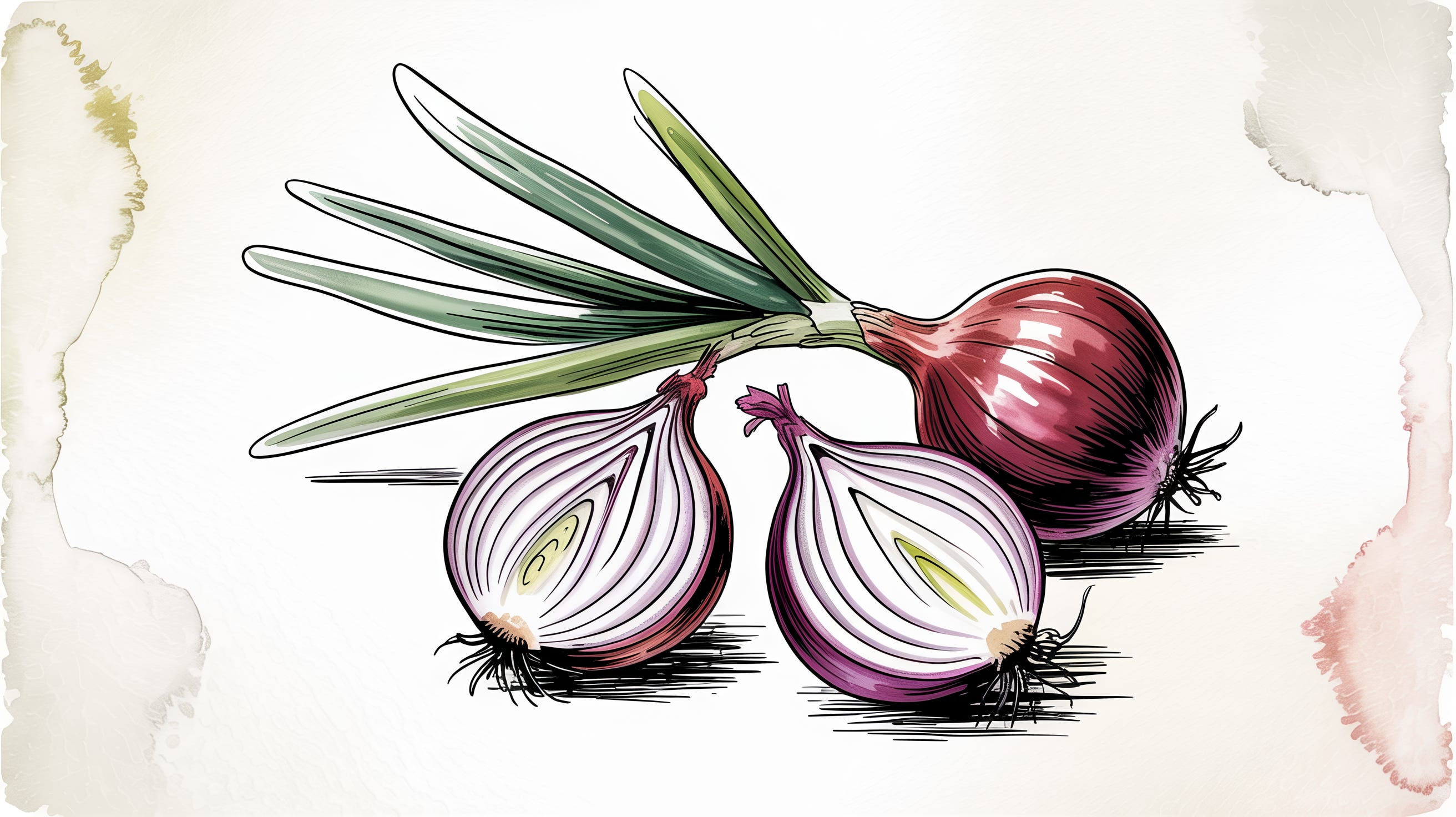
If you care about your eyesight, one of the simplest things you can grow is a red onion.
I know. It sounds like something your grandmother would say while forcing you to eat something you didn’t want. But she was right. She just didn’t know why.
Red onions contain two things your eyes actually need. The first is anthocyanins, the same compounds that make blueberries blue and blackberries black. They protect retinal cells from oxidative stress, which is a fancy way of saying they stop your eyes from wearing out too fast. The second is quercetin, which is found in the outer layers of all onions. Red ones just have a particularly good mix of both. Higher intake of these compounds is linked to lower rates of macular degeneration and cataracts.
People have known this for a very long time. They just stopped believing it.
Back in 1160 BC, Egyptian embalmers packed raw onions directly into a pharaoh’s eye sockets. The pharaoh was Ramesses IV. When archaeologists unwrapped his mummy in the 1880s, the onions were still there. Dried, blackened, but unmistakably onion tissue. The Egyptians believed onions had the power to restore sight in the afterlife. They also used them on the living. Papyrus scrolls from the same period describe onion juice dripped into infected eyes to clear up infections. Do not try this. It will burn and it will hurt. You have antibiotics. They did not.
That knowledge didn’t stay in Egypt. The Greeks wrote about it. Hippocrates prescribed onions for poor eyesight. The Romans copied the Greeks, and Pliny the Elder wrote that onions “remove dullness of sight.” The Arabic medical tradition preserved it, and Avicenna, a Persian physician whose medical encyclopedia was used in Europe for 500 years, listed onions as a treatment for eye diseases. Medieval European physicians said the same thing. For roughly 3,000 years, across multiple continents and civilizations, the same idea kept appearing. Onions protect the eyes. That wasn’t superstition. That was medicine.
Then the 19th century happened.
