

The Orange Was Never Supposed to Be Orange
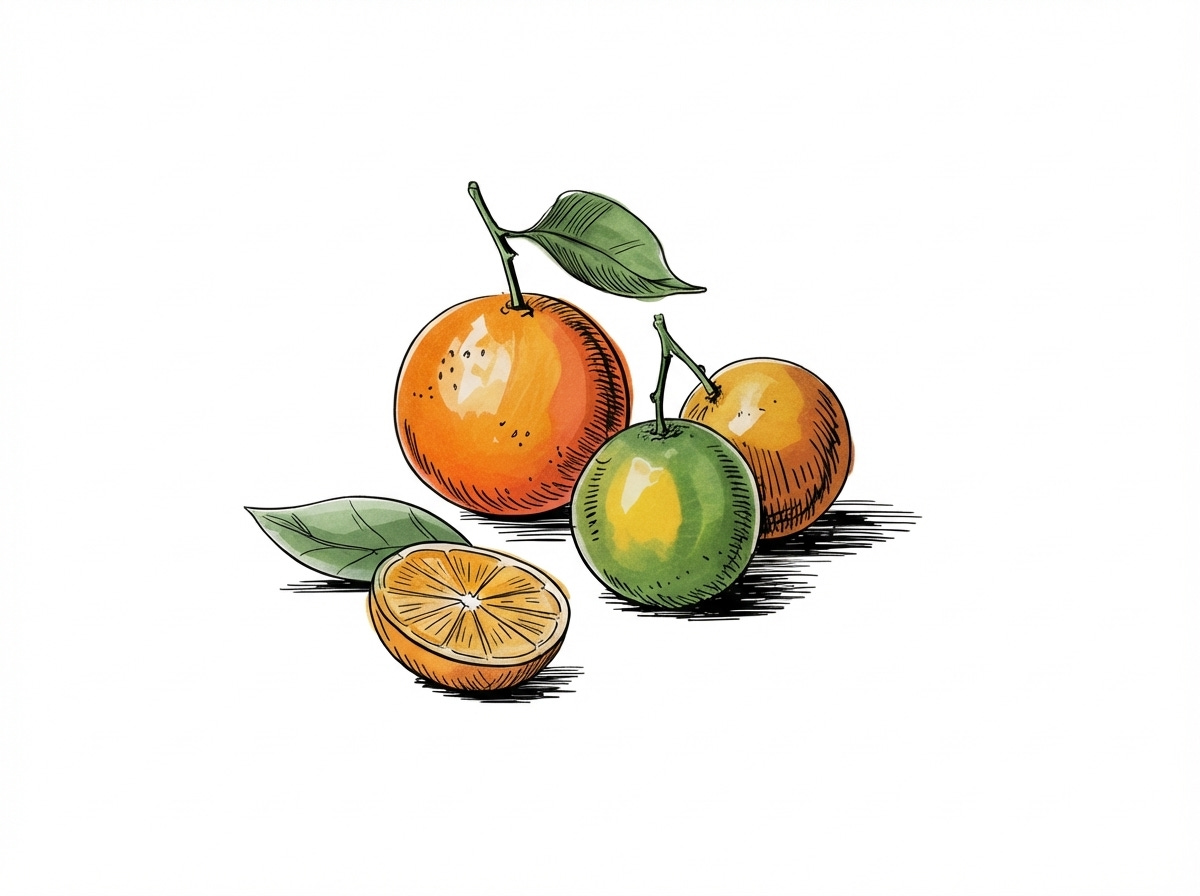
Most people don’t know this, but oranges were never supposed to be orange.
Oranges evolved in the warm, humid tropics of Southeast Asia where winters don’t exist. The foothills of the Himalayas, specifically a region stretching from eastern Assam through northern Myanmar to western Yunnan, is considered the center of origin for the genus Citrus. It was there, millions of years ago, that the ancestors of modern oranges first appeared.
In that climate, ripe oranges stay green year-round. Chlorophyll acts as a natural sunscreen against constant tropical heat. The fruit can be perfectly ripe, sweet, and ready to eat, but the peel remains green. In tropical regions with no winter at all, citrus fruits often stay green until maturity. The locals know a green orange is ready. They don’t need the color to tell them.
But in the 15th century, Portuguese traders brought oranges from tropical Asia to cold Mediterranean Europe. The Genoese merchants and Portuguese navigators introduced the sweet orange to Europe sometime in the early 1400s, and by the late 15th century it was being cultivated in Italy and from there spread across the continent.
When temperatures dropped in winter, the cold broke down the chlorophyll in the peel and revealed the orange pigments underneath. Carotenoids, the same pigments that give carrots and squash their orange color, are present in the peel the entire time. They’re just masked by the intense green of chlorophyll. Cool temperatures cause chlorophyll to degrade, and the orange color that was always there finally becomes visible.
It doesn’t take much cold to trigger this change. Even the slightest drop, just cooler nights in the 40°F range, can make an orange go from green to orange. A 1973 study on Satsuma oranges found that color development was influenced by diurnal temperature fluctuation, with less fluctuation actually producing better color. The study showed that consistent cool temperatures, not extreme swings, were what triggered the chlorophyll breakdown. Once the protective membranes around chlorophyll weaken in the cool air, the green pigment degrades and the orange underneath shines through.
Europeans had never seen a green orange. They only encountered the fruit after it had been exposed to Mediterranean winters, so they assumed orange was what ripe looked like. They believed the color signaled readiness, not the fruit itself.
The word “orange” has its own long journey, much like the fruit. It traces back to a Dravidian language, likely Tamil நாரம் (nāram) or Malayalam നാരങ്ങ (nāraṅṅa). From there it entered Sanskrit as नारङ्ग (nāraṅga), meaning “orange tree.” The word traveled into Persian as نارنگ (nārang), then into Arabic as نارنج (nāranj). When it reached Italian, it became arancia, and in Old French it evolved into orenge. The initial “n” was lost along the way, probably because it got mistaken as part of the indefinite article—”une norenge” sounded like “une orenge.” Before the English had a word for the color orange, they called it “geoluread” in Old English, which literally means “yellow-red.” The first recorded use of “orange” as a color name in English wasn’t until 1512, in a description of clothing purchased for Margaret Tudor. The fruit gave its name to the color, not the other way around.
Today the industry gases them with ethylene to break down the chlorophyll, or dyes them with a chemical called Citrus Red No. 2. Degreening is the standard post-harvest process for early season citrus grown in hot, humid regions like Florida. Fruit is exposed to 2–5 ppm ethylene gas for 24 to 72 hours at controlled temperatures. Research has shown that ethylene treatment at around 22°C effectively degreens oranges by breaking down chlorophyll and revealing the orange carotenoids underneath. This forces the chlorophyll to break down artificially, turning the peel orange without changing the internal quality. The use of Citrus Red No. 2 dye is limited to certain cultivars and is permitted in the U.S. to achieve the desired color consumers expect.
The only reason you think an orange-colored orange is because someone took the fruit somewhere cold enough to change its color, or gassed it in a warehouse to do the same thing. The fruit itself doesn’t care. It was ripe long before it turned orange.
Sources
Wikipedia. (2025). Orange (word). https://en.wikipedia.org/wiki/Orange_(word)
University of Arizona. (1992). Reestablishing sufficient peel color in regreened Valencia oranges. https://repository.arizona.edu/handle/10150/278218
Minnesota DNR. (2008). The science behind fall colors. https://www.dnr.state.mn.us/fall_colors/typical_peak.html
Wiktionary. (2024). Orange. https://zh.m.wiktionary.org/wiki/orange
J-Stage. (1973). Fruit Growth of Satsuma Orange under Controlled Conditions. Journal of the Japanese Society for Horticultural Science, 42(1), 13-21. https://www.jstage.jst.go.jp/article/jjshs1925/42/1/42_1_13/_article
Wikipedia. (2024). Orange (fruit): Difference between revisions. https://en.wikipedia.org/w/index.php?title=Orange_(fruit)&curid=4984440&diff=1252218496&oldid=1251900042
Quora. Why are oranges green in warmer climates? https://www.quora.com/Why-are-oranges-green-in-warmer-climates/answer/Gina-Haase
Wikipedia. (2008). Orange (word): Difference between revisions. https://en.wikipedia.org/w/index.php?title=Orange_(word)&diff=193409740&oldid=193385367