

The Plant That Stitched Eyes Shut and Became Tequila
It sounds a bit strange, but the plant used to make tequila was also used for surgery.
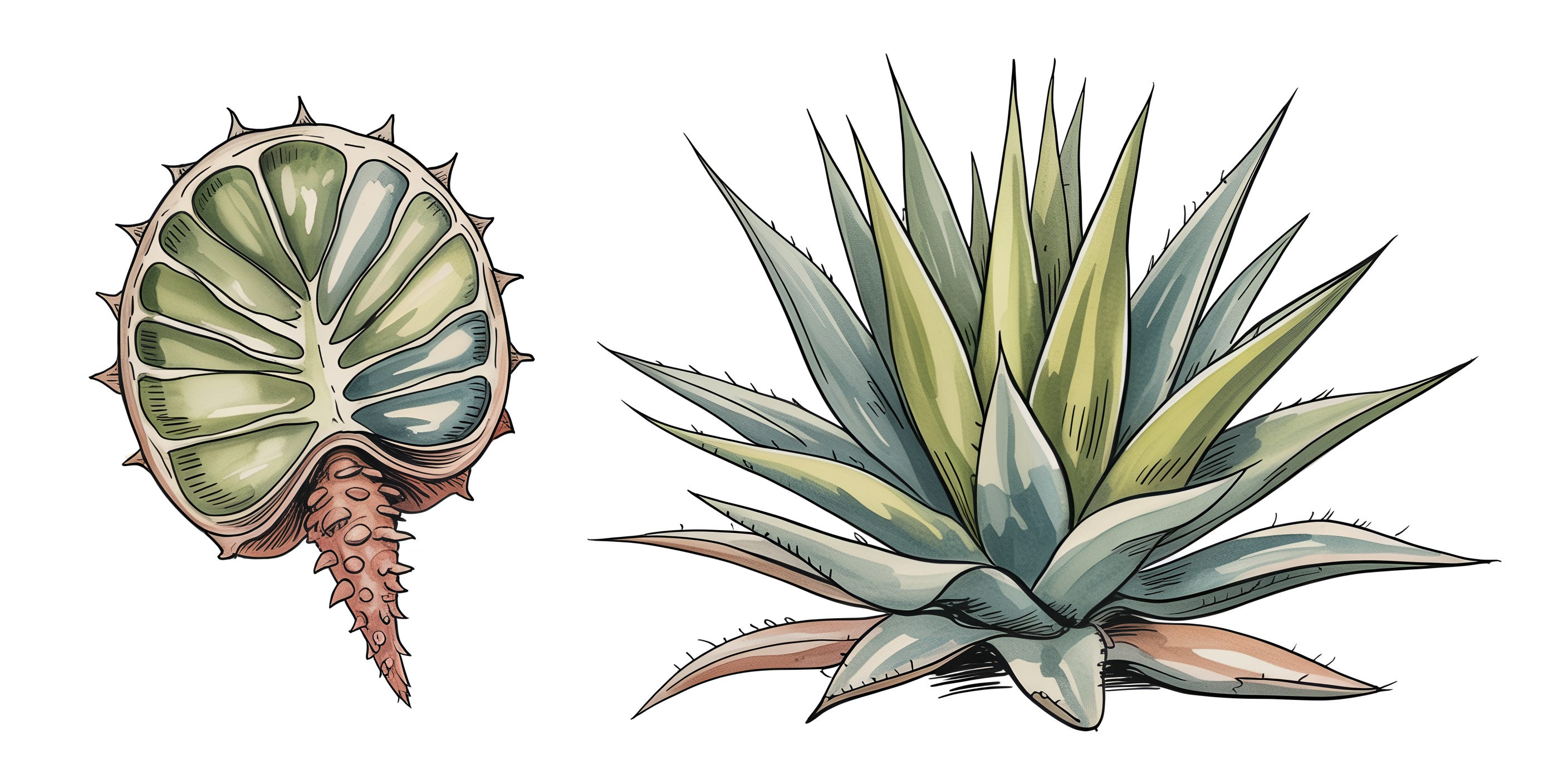
Agave typically grows tall, and it has these really sharp thorns at the end. Before agave was used to make margaritas, the Aztecs would use it to perform eye surgery and even stitch up wounds. Pterygium surgery—removing growths from the eye’s surface—was performed with agave thorns. They also sutured wounds with hair or vegetable fibers. Those agave needles were the surgical tools of their time.
The plant’s first traces in human history go back more than 10,000 years. The leaves made fiber for clothing. The dried leaves waterproofed roofs. The thorns became sewing needles. And when they needed soap, they made it from agave too.
But they also drank it.
The Aztecs made a milky alcoholic drink called pulque, or octli. They harvested the aguamiel—the honey water—by cutting out the heart of a mature plant and collecting the sap that pooled in the cavity. It flowed for four months sometimes, and they’d collect it twice daily. Then they fermented it.
And they drank it straight from the plant. Well, not straight from the plant, but fresh from the cavity. Pulque was sacred. It was used in religious ceremonies, believed to be an elixir that connected the living to the world of gods and spirits. It was also nutritious, probiotic, and so thick that one glass made you feel full—handy during years when the maize crops failed.
When the Spanish arrived in Mesoamerica in the 1500s, they were running out of wine. Ships from Spain couldn’t bring enough. They noticed that the Mesoamericans were already fermenting sap from the agave. So they took it a bit further by distilling it.
The Spanish brought distillation technology with them—either from their own Moorish influenced tradition or possibly from Filipino sailors who arrived via the Manila galleons. They took that fermented agave juice and ran it through copper stills. The result was mezcal.
You can make mezcal with any kind of agave. Over 30 species are used today. Espadín is the most common, but you’ll also find wild varieties like tobalá, tepeztate, and jabalí. Each gives a different flavor.
Eventually, they figured out that one particular agave—the blue agave, Agave tequilana Weber—produced something special. They distilled it in the region around the town of Tequila in Jalisco. And that’s how tequila was born.
The same plant that stitched wounds shut and fed empires became the drink in your margarita. A thorn, a needle, a suture, a roof, a soap, a sacred milk, a smuggled spirit, a global icon.
Sources
Orozco, H. (2000). “Surgery in Mexico.” JAMA Surgery. https://jamanetwork.com/journals/jamasurgery/fullarticle/390523
Wikipedia. (2006). “Pulque.” https://webarchiveweb.wayback.bac-lac.canada.ca/web/20060913000000/http://en.wikipedia.org:80/wiki/Pulque
Wikipedia. (2026). “Mezcal.” https://en.wikipedia.org/wiki/Mezcal
Mezcal Devoción. “Agave: A History of Time.” https://mezcaldevocion.com/en/lagave-une-histoire-du-temps-2/
Science. (2014). “Drinking up at Teotihuacan.” https://www.science.org/content/article/drinking-teotihuacan
Encyclopedia Britannica. (2026). “Mezcal” and “Tequila.” https://www.britannica.com/topic/mezcal
Bancroft, H.H. (1883). History of Mexico, Vol. 3. Wikisource. https://en.m.wikisource.org/wiki/Page:Vol_3_History_of_Mexico_by_H_H_Bancroft.djvu/628