

The Potato That Isn't a Potato
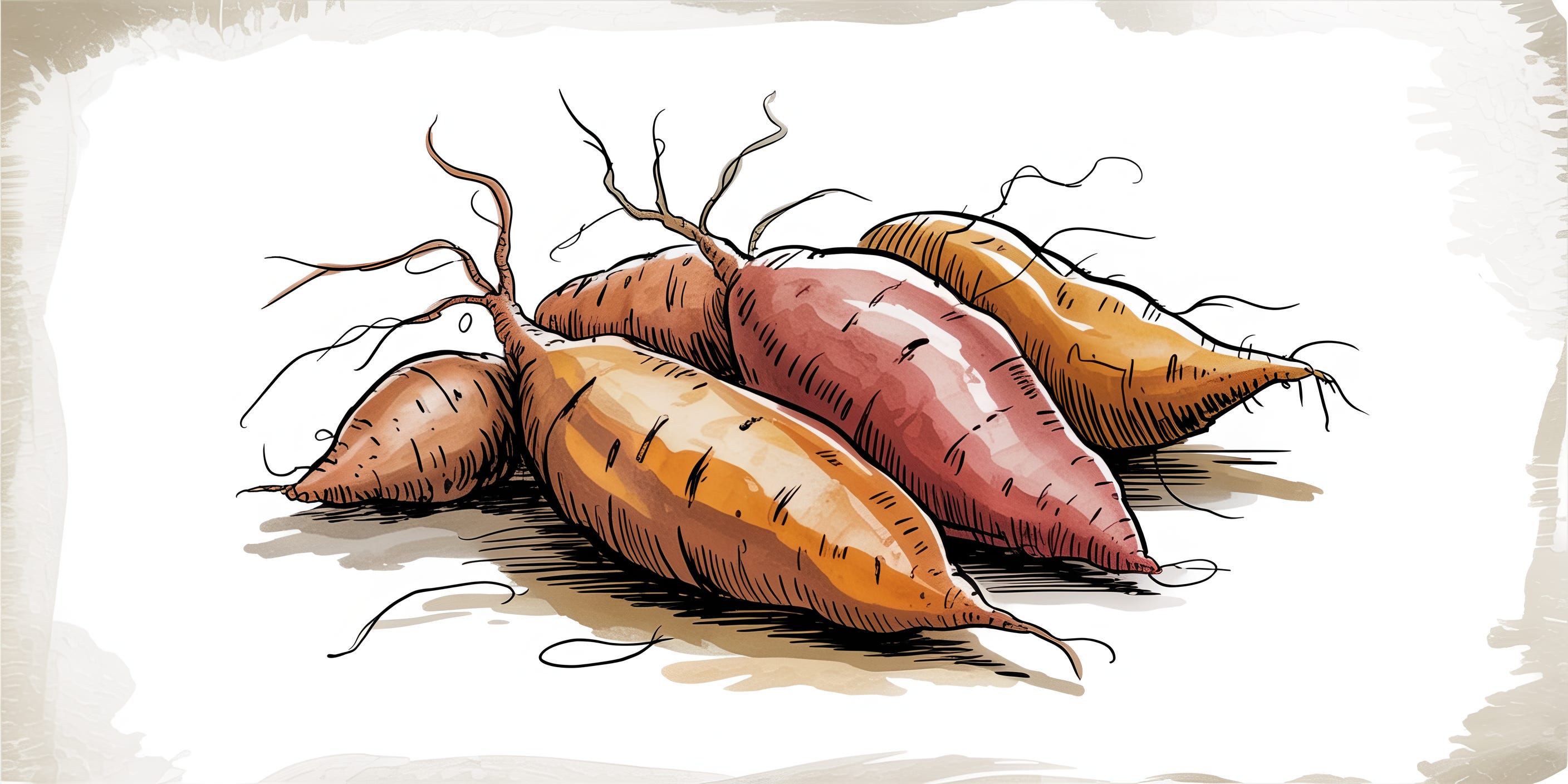
Most of you will never grow a sweet potato. That’s partly because they’re not what you think they are.
Sweet potatoes aren’t potatoes at all. They’re in the morning glory family, Ipomoea batatas.¹ Regular potatoes are in the nightshade family, Solanum tuberosum.² The two plants are only distantly related, both in the order Solanales, but separate families entirely.³ Calling them both “potatoes” is like calling a dog and a cat both “mammals” and expecting them to behave the same way.
The name came from confusion. When Spanish and Portuguese explorers saw sweet potatoes in the Caribbean and South America in the 1490s, they called them “batatas” from the Taíno word “batata.”⁴ When they later encountered regular potatoes in the Andes, they called those “patata” or “potato.”⁵ English speakers combined the terms, creating lasting confusion.⁶
But when Europeans tried to grow regular potatoes in hotter, tropical places, they often failed. Potatoes need cooler climates. They struggle in heat.⁷ So on plantations across the Caribbean and American South, enslaved Africans were made to grow sweet potatoes instead.⁸ Sweet potatoes could handle heat and tough conditions that regular potatoes couldn’t.⁹
Provision grounds, areas of poor quality land often at distance from plantation villages, were set aside for enslaved Africans to grow their own food.¹⁰ Sweet potatoes dominated these plots. They grew easily even in less than ideal soil.¹¹ Enslaved people could cook them over fire or wrap them in leaves and ash-roast them.¹²
The Stapleton estate on Nevis had 31 acres set aside for yams and sweet potatoes for estate use, while enslaved people had five acres of provision ground on rougher terrain.¹³ Plantation owners distributed North American corn, salted herrings and beef, while sweet potatoes became winter staples.¹⁴
That’s why sweet potatoes are much more common in places like the tropics and the Deep South. The climate suited them. The labor systems forced them.
The Spanish called them “batata.”¹⁵ That word helped shape the English “potato.” But enslaved Africans called them “yams” because they looked like the nyami they grew in West Africa.¹⁶ The word “yam” comes from West African languages. “Nyami” in Fulani means “to eat.” “Anyinam” in Twi literally means “yam.”¹⁷ These were the real yams, Dioscorea species, a completely different plant with rough bark-like skin and white flesh that can grow up to 45 feet long.¹⁸
Yams were the most common food fed to enslaved Africans on ships crossing the Atlantic.¹⁹ A ship carrying 500 enslaved people needed over 100,000 yams to provision the voyage.²⁰ When enslaved Africans arrived in America and found no true yams, they applied the word to the closest thing available.²¹ Sweet potatoes became “nyami,” became “yams.”²²
The naming stuck. By the 1930s, Louisiana farmers growing orange-fleshed sweet potato varieties started marketing them as “yams” to distinguish them from the paler, drier varieties grown in the East.²³ The USDA allowed Louisiana to brand these moist, bright orange Puerto Rico varieties as yams.²⁴ Today, grocery stores sell “yams” that are actually sweet potatoes, and “sweet potatoes” that were never true potatoes.²⁵
The people who knew the original African names and stories behind those “yams” had their words and histories pushed into the background. The linguistic transfer happened under conditions of enslavement. The cultural memory survived, but the context was erased. Now most Americans don’t know that when they call a sweet potato a “yam,” they’re speaking a West African word that crossed the Atlantic in slave ships.
Which means one of the most common foods in American grocery stores carries a name that documents both botanical confusion and the forced displacement of African peoples and their crops.
Sources
Wikipedia contributors. (2026). “Sweet potato.” Wikipedia. https://en.wikipedia.org/wiki/Sweet_potato
“Sweet Potatoes vs Potatoes: Not in the Same Family.” Spice.alibaba.com, December 20, 2025. https://spice.alibaba.com/spice-basics/are-sweet-potatoes-in-the-potato-family
“sweet potato (Ipomoea batatas).” Botanical Realm, November 2, 2024. https://www.botanicalrealm.com/plant-identification/sweet-potato-ipomoea-batatas/
Wikipedia contributors. (2026). “Sweet potato.” Wikipedia. https://en.wikipedia.org/wiki/Sweet_potato
“Sweet Potatoes vs Potatoes: Not in the Same Family.” Spice.alibaba.com, December 20, 2025. https://spice.alibaba.com/spice-basics/are-sweet-potatoes-in-the-potato-family
“Sweet Potatoes vs Potatoes: Not in the Same Family.” Spice.alibaba.com, December 20, 2025. https://spice.alibaba.com/spice-basics/are-sweet-potatoes-in-the-potato-family
“The Plant-Based Food from Africa and Slavery That We Eat Today.” Plants-Rule, June 10, 2020. https://plants-rule.com/african-american-slavery-food-history/
“Food History.” Food with Roots. https://thefoodwithroots.com/pages/culinary-history
“Food History.” Food with Roots. https://thefoodwithroots.com/pages/culinary-history
“Slavery on Caribbean Sugar Plantations from the 17th to 19th Centuries.” Brewminate, April 14, 2024. https://brewminate.com/slavery-on-caribbean-sugar-plantations-from-the-17th-to-19th-centuries/
“The Plant-Based Food from Africa and Slavery That We Eat Today.” Plants-Rule, June 10, 2020. https://plants-rule.com/african-american-slavery-food-history/
“The Plant-Based Food from Africa and Slavery That We Eat Today.” Plants-Rule, June 10, 2020. https://plants-rule.com/african-american-slavery-food-history/
“Slavery on Caribbean Sugar Plantations from the 17th to 19th Centuries.” Brewminate, April 14, 2024. https://brewminate.com/slavery-on-caribbean-sugar-plantations-from-the-17th-to-19th-centuries/
“Yams and Sweet Potatoes: What’s the Difference?” Country Roads Magazine, November 26, 2018. https://countryroadsmagazine.com/cuisine/Louisiana-foodways/i-yam-what-i-yam-or-not/
Wikipedia contributors. (2026). “Sweet potato.” Wikipedia. https://en.wikipedia.org/wiki/Sweet_potato
“I Yam Not A Sweet Potato.” EarthDate. https://www.earthdate.org/episodes/i-yam-not-a-sweet-potato
“Many Food Names in English Come From Africa.” VOA Learning English, February 12, 2018. https://learningenglish.voanews.com/a/many-food-names-in-english-come-from-africa/4236534.html
“The Deep and Twisted Roots of the American Yam.” The Ringer. https://www.theringer.com/2021/11/24/22798644/yam-sweet-potato-american-history
“How The Sweet Potato Became The Yam: An Identity Theft of Trans-Atlantic Proportions.” Ampersand, July 23, 2019. https://www.ampersandla.com/how-the-sweet-potato-became-the-yam-an-identity-theft-of-trans-atlantic-proportions/
“How The Sweet Potato Became The Yam: An Identity Theft of Trans-Atlantic Proportions.” Ampersand, July 23, 2019. https://www.ampersandla.com/how-the-sweet-potato-became-the-yam-an-identity-theft-of-trans-atlantic-proportions/
“I Yam Not A Sweet Potato.” EarthDate. https://www.earthdate.org/episodes/i-yam-not-a-sweet-potato
“The Deep and Twisted Roots of the American Yam.” The Ringer. https://www.theringer.com/2021/11/24/22798644/yam-sweet-potato-american-history
“Sweet Potatoes Vs. Yams: What’s The Difference?” Tasting Table, August 25, 2022. https://www.tastingtable.com/981171/sweet-potatoes-vs-yams-whats-the-difference/
“History & Lore.” County Line Packing. https://www.countylinepacking.com/history
“Sweet Potatoes vs Yams.” Sweet Potato Soul, November 17, 2023. https://sweetpotatosoul.com/sweet-potatoes-vs-yams/