

The Root That Feeds Africa but Came From Across the Ocean
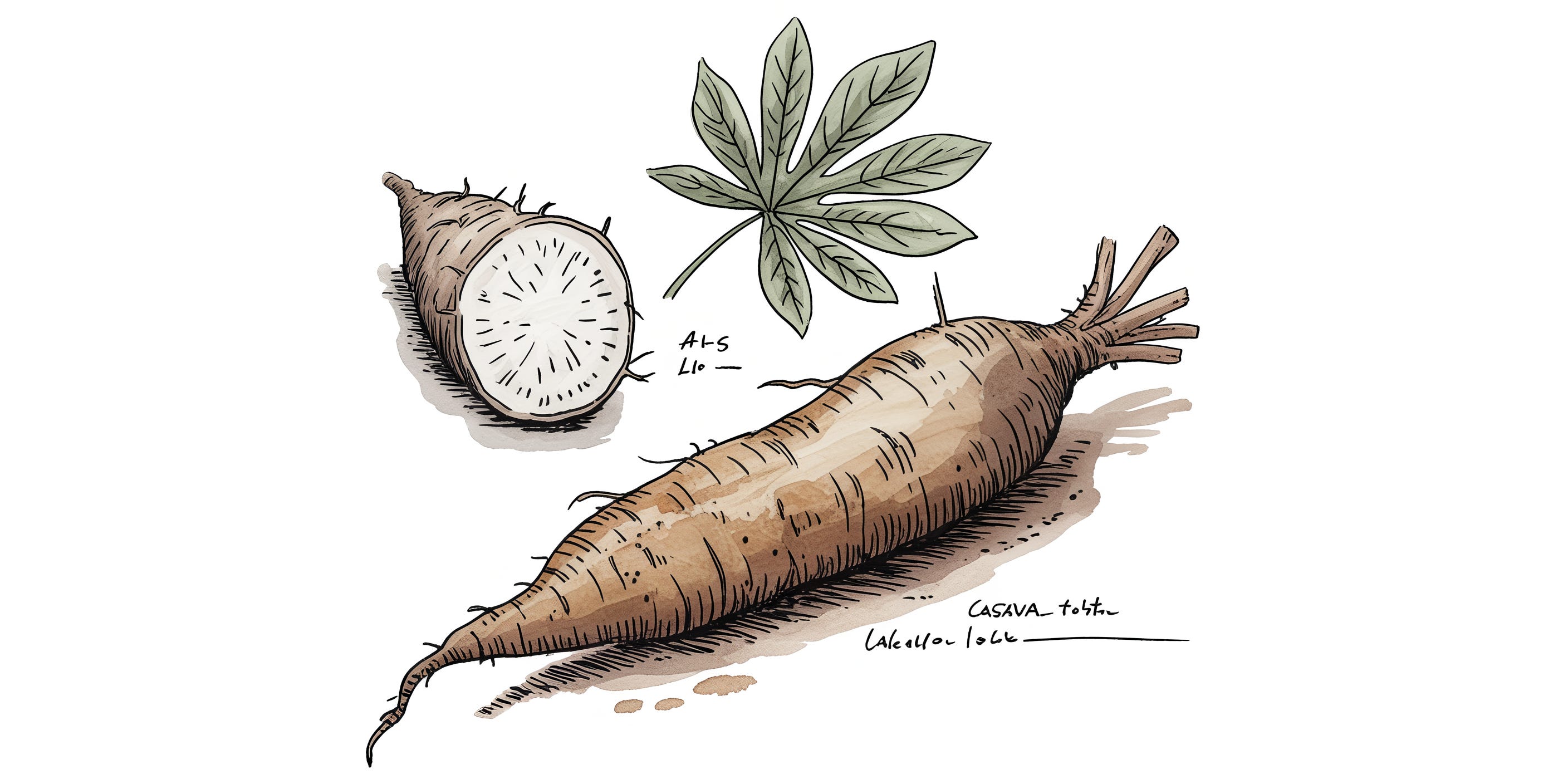
One of the world’s most important food crops is also poisonous.
Cassava is the plant used to make fufu, gari, and even tapioca. It’s a woody shrub with starchy tuberous roots that grow underground. In large areas of sub-Saharan Africa, it provides a major daily source of dietary energy for millions of people. It’s estimated to be grown on 18.7 million hectares worldwide, yielding about 233 million tonnes of roots annually.
But here’s the thing. When you crush the plant or chew it, it releases hydrogen cyanide. The same chemical classified as a chemical weapon under international law.
The plant contains cyanogenic glycosides, specifically linamarin and lotaustralin. These compounds sit harmlessly in the plant cells until something damages them. When you cut, crush, or chew cassava, an enzyme called linamarase mixes with the glycosides and breaks them down. One of the breakdown products is hydrogen cyanide.
There are varieties that can be eaten raw. The sweet ones have low cyanide content, less than 0.5 mg per kilogram. But the darker the cassava, the more dangerous it is. Bitter varieties can contain over 300 mg of hydrogen cyanide per kilogram of fresh root. The lethal dose for an adult is about 60 mg per day.
