

The Squash That Didn't Exist Until the 1940s
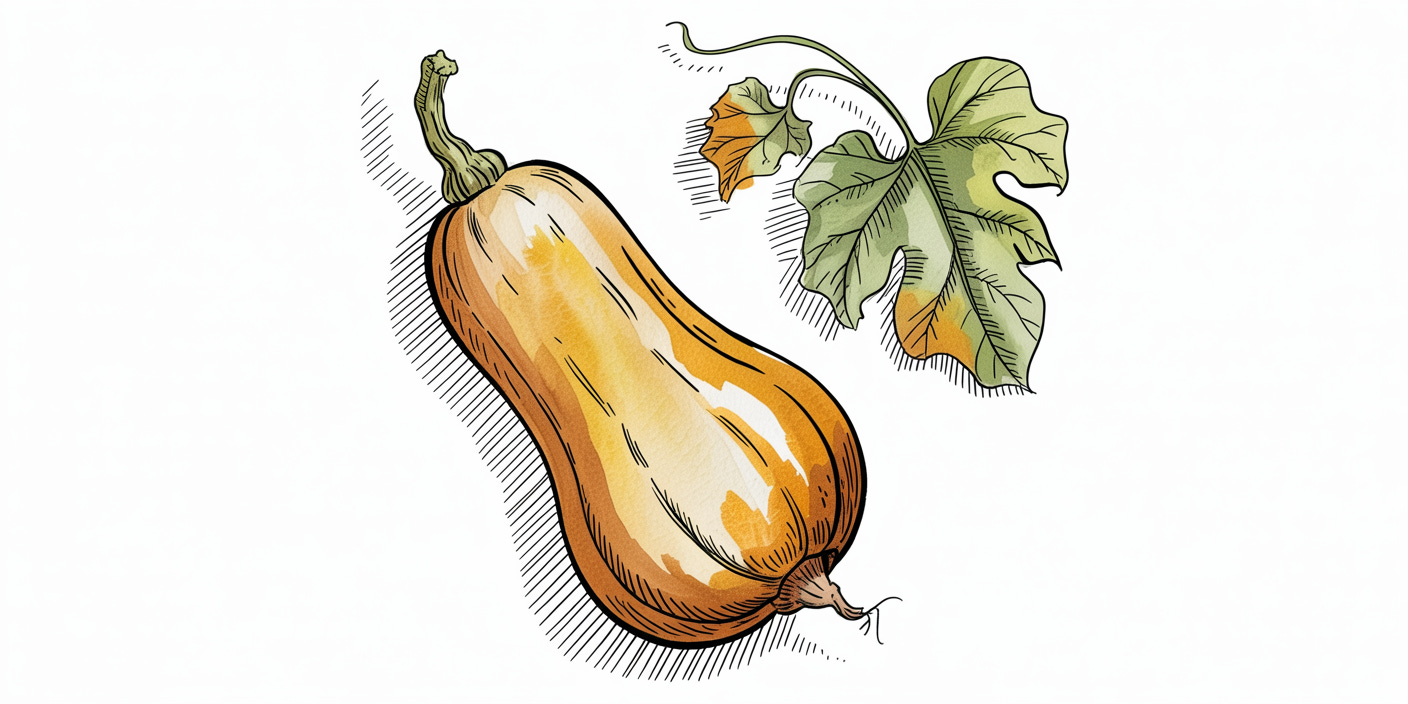
If you were brave enough to roam the forest a hundred years ago, you would never find a butternut squash. And that’s because they didn’t exist.
Butternut squash isn’t naturally occurring. It wasn’t growing wild anywhere. It wasn’t hiding in some forgotten valley waiting to be discovered. It was created. By one man, in his garden, in the middle of the twentieth century.
Charles Leggett of Stow, Massachusetts, was not a plant breeder by training. He moved from the city to the country because of his father’s health. The house he bought came with land, and he started thinking about squash. He thought the Halloween pumpkins were too watery and bland. The Hubbard squashes he saw were too big for a family meal. He wanted something sweeter than a pumpkin but smoother than a gourd.
So for about ten entire grow seasons, he would cross breed different plants and observe the traits. He took a gooseneck squash, which is long and gangly, and crossed it with other squashes, including some from the species Cucurbita moschata. He kept selecting, season after season, until he got what he wanted.
Eventually he got squash that tastes almost like a sweet potato. The flesh was smooth. The flavor was sweet. The texture was nothing like the coarse, stringy pumpkins people were used to.
He called it butternut. “Smooth as butter, sweet as a nut.” Dorothy Leggett, his wife, confirmed that’s where the name came from.
When Leggett finished, he took his creation to the Waltham Field Station in Massachusetts. The researchers there were impressed. They developed it further, standardized it, and released it as the Waltham Butternut, named after the station where it was refined.
Butternut squash actually gets sweeter after you harvest them. Most fruits get worse after picking. They sit there, slowly rotting, losing flavor. But butternut squash has a built-in starch to sugar conversion process. If you leave it in a warm place for ten to fourteen days at around 80 to 85 degrees, the starches turn into sugars. The flavor deepens. The sweetness intensifies.
And if you cure it properly, butternut squash can last up to six months without any refrigeration. Some sources say two to three months under ideal storage conditions of 50 to 55 degrees. Others say with careful curing and storage, they can keep through the winter and into spring. University of Delaware Extension says hard-shelled squash like butternut can be stored for at least three months, with some types lasting up to six. Gardeners report eating perfectly good butternuts a year after harvest.
A squash that didn’t exist a hundred years ago. Created by one man in his garden over ten years. Named for its butter smooth texture and nutty sweetness. That gets better after you pick it. That can sit in your pantry for half a year and still be good.
Which is… pretty insane.