

The Yam That Hid a People and Fueled a Champion
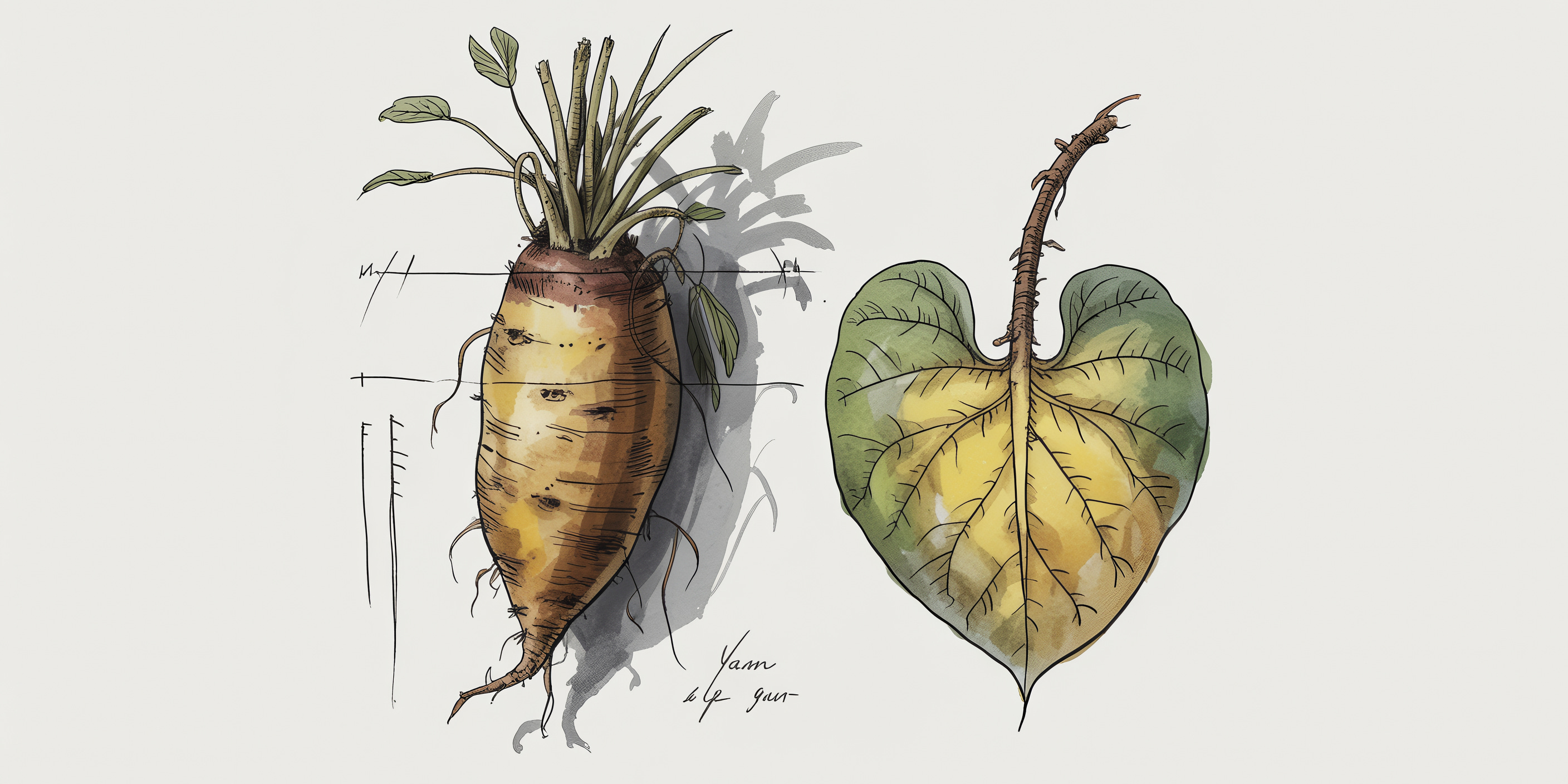
Most of you will never grow yellow yam. And that’s because it takes almost a year to grow. About nine to eleven months, roughly the same time it takes for a human baby to gestate in the womb.
Yellow yam is usually planted deep in the ground, buried in mounds of soil, so most people never really see it growing. It’s down there, underground, doing its slow work while the world goes on above.
In the mountains of Jamaica, there was a group called the Jamaican Maroons. They were escaped slaves who resisted being ruled by the British. When the English took Jamaica from the Spanish in 1655, enslaved Africans fled into the mountainous interior and never came back. They formed independent communities, fought two wars against the British, and won treaties guaranteeing their freedom in 1739 and 1740. Queen Nanny, their leader, is one of Jamaica’s National Heroes.
They would hide yellow yams deep in all the forest patches so the people hunting them couldn’t find it. The Maroons knew the British patrols couldn’t survive long in the bush without food supplies. So they planted caches of yams throughout the wilderness. Food stores, hidden underground, that would be ready when they needed them.
Yellow yam can survive almost anything. Dry spells. Bad soil. Neglect. It just sits there in the earth, patient, waiting. But it takes almost an entire year to be fully grown. So the Maroons would map out where each yam was planted. Mental maps of the forest floor. And they would return months later, when it was ready to harvest, to a meal they’d planted for themselves in the middle of a war.
The fastest human on earth credits his speed to eating yellow yam growing up. Usain Bolt, from Trelawny parish, which accounts for up to 60 percent of Jamaica’s yam production. His father said the yams built his frame. The yellow yam is high in starch, contains an enzyme that converts starches to sugars, and is packed with potassium and vitamin C. Bolt ate it growing up and became the fastest man in history.
Even now, in patches throughout the forest, yellow yam is scattered underground. Fueling the living creatures that find it. The same survival strategy the Maroons used two hundred years ago is still playing out in the Jamaican earth. A root that waits. A people who hid. A champion who ran.
Which is pretty insane.
Sources
Wikipedia. (2025). “Jamaican Maroons.” https://en.wikipedia.org/?curid=9819435
NAAATT. (2014). “Love in the symmetry: Why is Jamaica home to so many of the world’s elite sprinters.” Trinidad Express. https://naaatt.org/archive/news/article/2014/12/2014_12_01_love_symmetry_jamaica_sprinters.html
Jamaica Gleaner. (2008). “Yellow Yam - Worth its weight in gold.” https://old.jamaica-gleaner.com/gleaner/20080825/lead/lead3.html
Daily Mirror. (2008). “Olympic 100m hero Usain Bolt powered by chicken nuggets and yams.” https://web.archive.org/web/20081121215958/http://www.mirror.co.uk/news/top-stories/2008/08/18/olympic-sprint-hero-usain-bolt-s-chicken-nuggets-diet-secret-115875-20702431/
Britannica. “Maroon community - The Jamaican rebellions.” https://www.britannica.com/topic/maroon-community/The-Jamaican-rebellions
La Gazzetta dello Sport. (2008). “E voleva fare il portiere...” https://www.gazzetta.it/Speciali/Olimpiadi/Primo_Piano/2008/08/20/bolt_storia.html