

There Is No Such Thing as a Kiwi Fruit
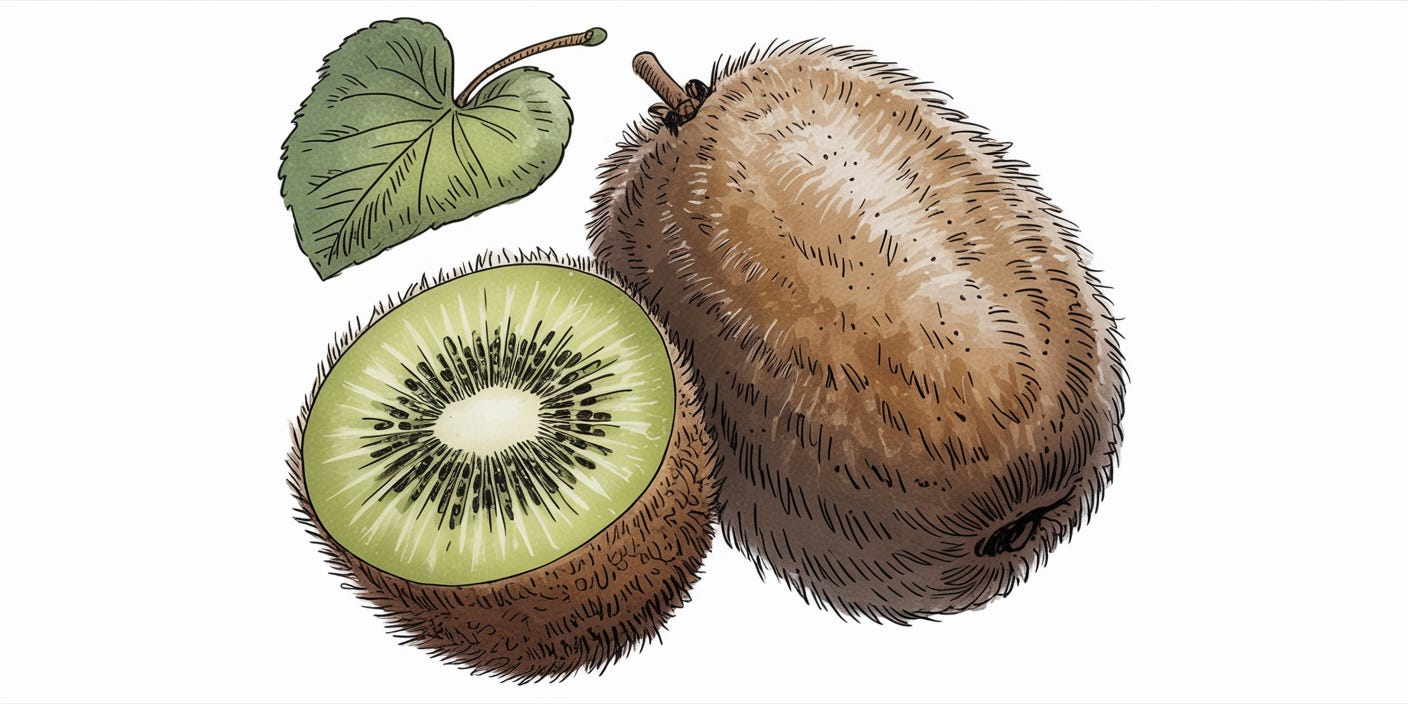
When I went looking into where this fruit actually came from, I kept finding a different name every time the story moved. That’s not an accident. Every name change was a business decision. And every business decision was made to hide the last one.
The kiwifruit is native to central and eastern China. The first unequivocal written reference appears in a Tang dynasty poem by Cen Shen, written around 750 AD, describing a mihoutao plant growing above a well in what is now Shaanxi province. The poem suggests the fruit was being cultivated in gardens at least 1,200 years ago. In the late 16th century, pharmacist Li Shizhen described the fruit in his Compendium of Materia Medica: “Its shape is that of a pear, its color that of a peach, and monkeys like to eat it, hence its name.”
Mihoutao. Macaque peach. Named because macaques got to it before people did.
Seeds arrived in New Zealand in 1904, brought back from China by Isabel Fraser, headmistress of Wanganui Girls’ College, who had been visiting her missionary sister. She gave them to a farmer named Alexander Allison. His trees bore their first fruit in 1910. People tasted it and thought it resembled a gooseberry. It came from China. So they called it the Chinese gooseberry. Not a scientific designation. Not a formal naming. Just what it tasted like, plus where it was from.
That name stuck for fifty years.
New Zealand began exporting the fruit to the United States in the early 1950s. By the end of that decade, the name had become a commercial problem with multiple causes stacking on top of each other.
